|

Bill Gordon's maze
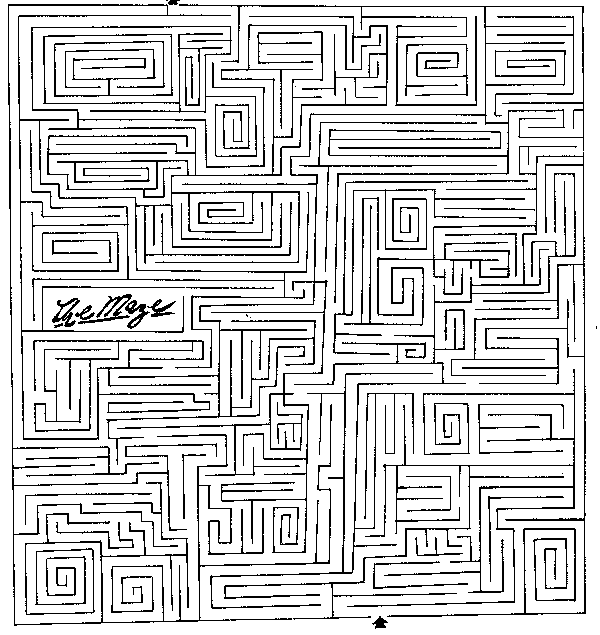
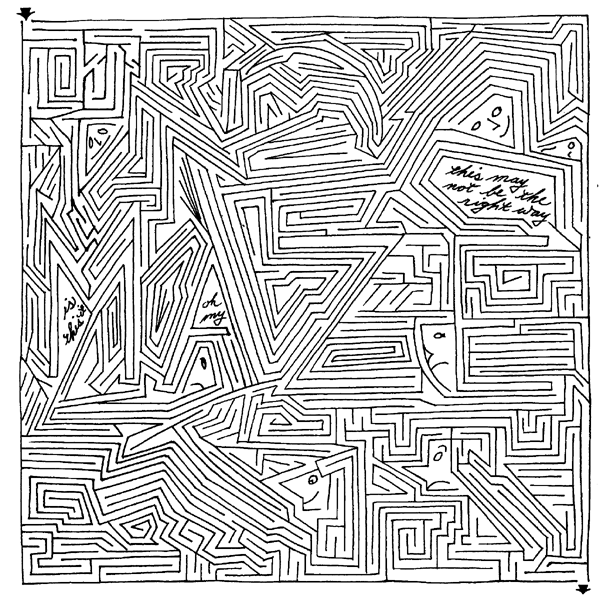
A teacher (at Rough Rock in Arizona) drew this laborious maze on
graph paper to keep the children amused on the last day of term.

Sac maze
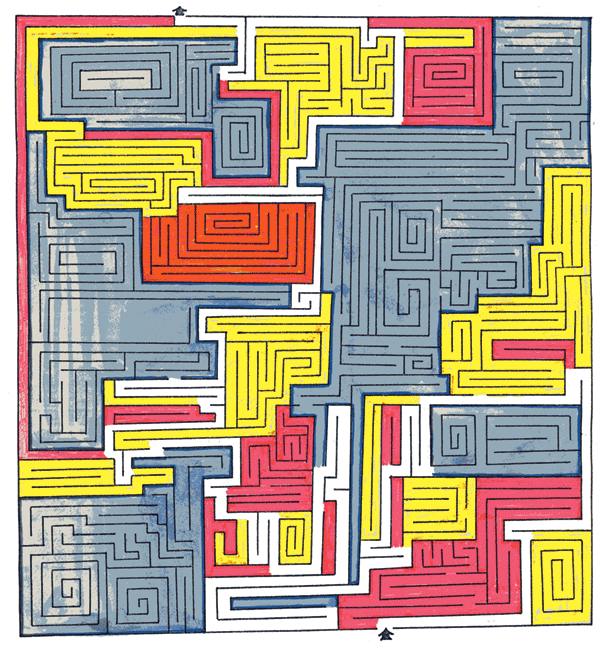
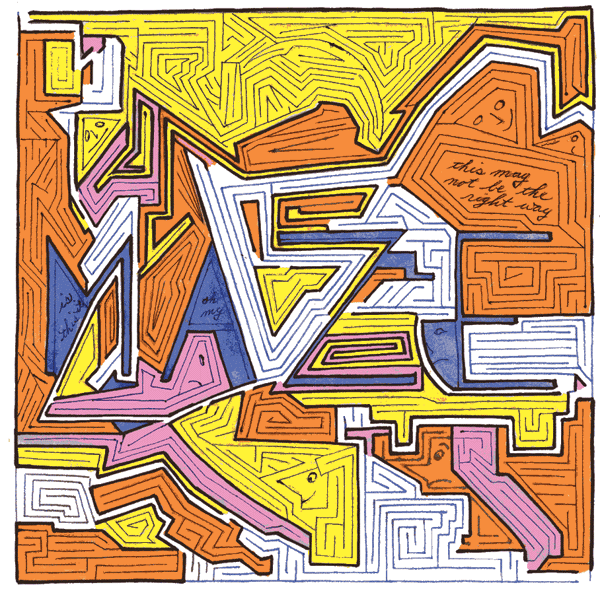
I solved it by coloring "sacs"areas filled by paths
leading to dead endsso as to leave the "through-path"
clear.
The maze comes to look like a map of a palace, with mosaic-tiled
rooms and courtyards.

Bill Gordon's maze 2
He tried to frustrate my scheme.
("Oh my!" was a surprisingly bland and old-fashioned
English exclamation that Navajo kids seemed to like.)

Sac maze 2
Sacs may take the form of islands, surrounded by parts of the through-path.
The sac-and-throughpath analysis can be a tool for improving mazes.
It becomes easy to see that no one would bother to enter the huge
yellow sac just before the exit. By opening or closing entrances
between a sac and the throughpath, or between sacs, one can enlarge
sacs, re-route the throughpath, generally enhance the paradoxical
properties of the maze. And

Code maze
It struck me that this can be applied as a way of composing mazes.
And as a code: draw an outline picture, disguise it by filling each
area with a sac of mazy lines; someone else can solve the maze by
coloring the sacs and thus reveal the picture. There could be better
examples.

Maze of the planets
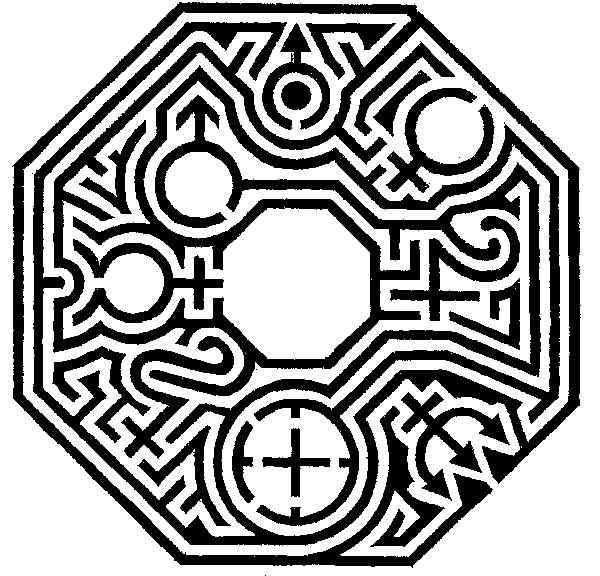
I later met, in St. Albans, the maze-maker Adrian Fisher. During
our talk he gave me, on a scrap of paper, this design for a maze
embodying the traditional symbols of the eight planets. It has many
of the classic paradoxical features of an excellent maze. I printed
it along with my Daedalus-and-Icarus picture in Astronomical
Calendar 1997.
Coming from outer space, you enter through the symbol for Neptune
(with his trident) and find your way laboriously inward through
the symbols for Uranus, Saturn, Jupiter, Mars, Earth, and Venuscrossing
each time, like a looping Pioneer or Voyager spacecraft, almost
to the opposite side of the solar systemtill at last from
Mercury's bedazzled door you enter the court of the Sun.

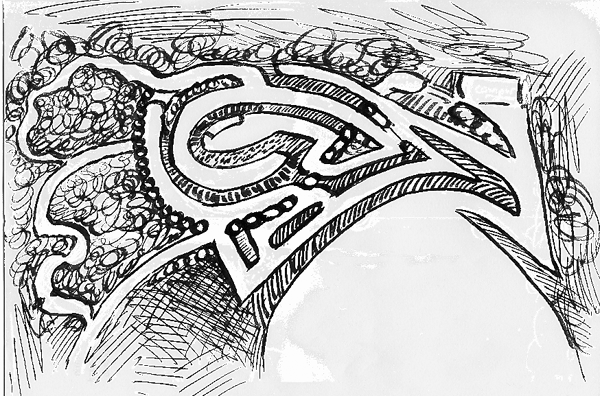
Lenore maze
Diagram of my low-hedge maze in a garden in Greenville, South Carolina.
The plan grew from mowing the lawn spirally. Some of the materials
were sunflowers, nandinas, mint, bugloss, hollyit was a template
into which to plant anything. There was a wall of massive Leyland
cypresses at the right, and I added some as a tongue at the front
right. The first false turning led to a compost bin; the second,
to a tiny raised lawn. Some passages were blocked by mere "plugs"
of ornamental grass. In mazes, there should be plenty of mismatch
between geometry and topology. There was an elliptical inner regiongeometrical,
not topological: its boundary (a front curve of junipers and a rear
curve of sections from a fallen maple) was pierced by openings.
The innermost region had a herb garden in front of the bench and
a trellis behind. Getting to the center necessitated an at first
unnoticed path that (with a side outlet to a street) rambled away
(under an old swing-set covered by a Carolina jasmine) into a wilderness
of brambles and poison ivy. A stick gate closed a way out for the
mower.

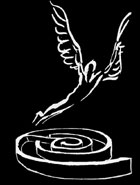
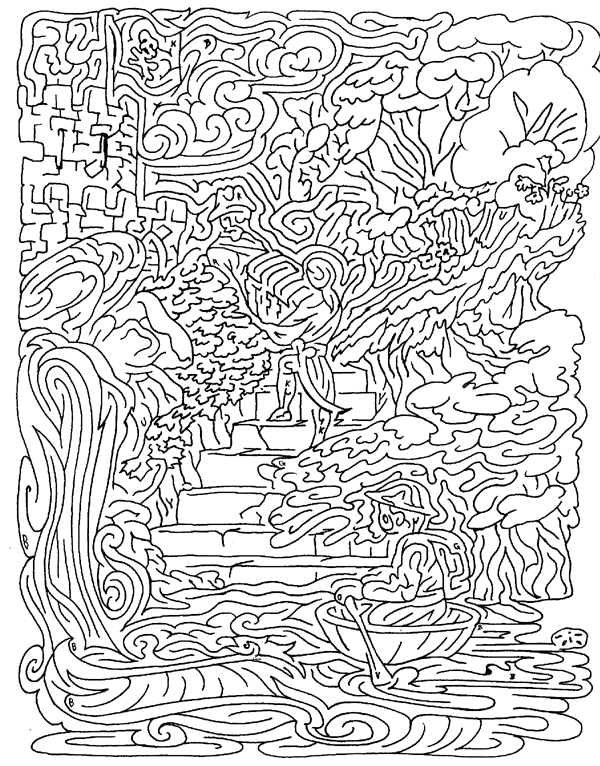
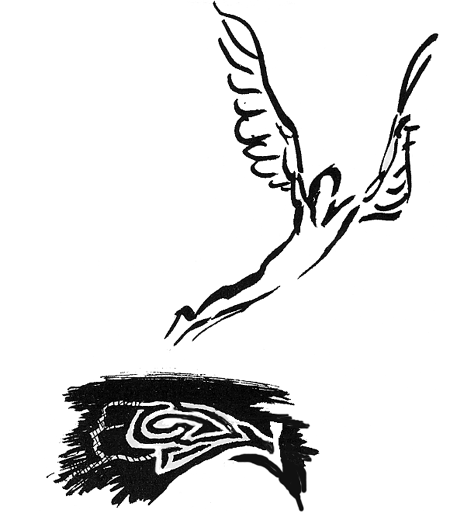
Daedalus flying free from the labyrinth
he had made for King Minos and in which he was imprisoned. Sketch
made for a newsletter advertising an Amnesty International party
to be held in the garden (with a treasure-hunt through the maze).
|