A man perched on a stool in the saloon of a hotel. His black hair had begun to be checkered with white. Resignation: that was what the lift of his features wanted to express but the shape of his head did not allow. Have you noticed the face of lion in the face of man, the T of brow and nose? He was a world champion, fallen on hard times.
The hotel served as a club for expatriates in the capital of a Persian-speaking country. There were other perching birds: on the next bar stool to the left, a young female. Elsewhere, a drunkard, a diplomat, a wearer of a green turban. But our man was the focus of attention.
He was facing away from the bar, into the crowded room. A dozen small square tables had been arranged in an arc. On them, the armies, white and black, were already arrayed on the battlefields, the white-and-black-checkered boards. Behind each table sat a challenger.
Spectators stood along the back of the room. Some wished they had taken their chance to be among the challengers, others were glad they had not risked it. Some were exchanging remarks about the situation, as if it was a show staged for them – as it was. “Looks like a man who’s lost everything, doesn’t he?” murmured a husband to his wife.
“Or who intends to get some back.”
“May have picked up a bit already” – leeringly pointing with chin at the shapely Persian percher.
“I heard her name’s Fairose”, contributed another gossip-monger.
“Pharaoh’s? Which pharaoh?”
“Feyrouz”, corrected someone who knew the language. “A good old Farsi name. It means – ah – winner.”
A man in a blue suit came out from behind the bar. He was an imposing, a T-shaped man. You could imagine an admiral’s epaulettes on his square shoulders, medal ribbons on his broad chest. He was the boss of the hotel.
“Thank you all for your eagerness to be here.”
He spoke in English that was a trifle too perfect.
“It is not off-ten, even on a Sature-day, that we have such company. It is no wonder that you are a-gog for the chance to meet, and go a round with, the great Lev Granin.
“Or, should I say, the once great Granin? Going a round with him will not be as rough as going a round with Tyson Fury. Your nose will not bleed, though your nous may. Ha ha! I shall be referee. His opening move, I hope, will be to re-gale us with the story of what has passed since his loss, his narrow loss in the re-match with the challenger. The young and not universally liked challenger.”
Lev began to rise from his perch on the stool, then remained where he was.
“The story–”
His voice was a rich bass. His English, too, was the product of education.
“The story is quickly told. I have had to live from place to place, earning what I could. I have lived on cruise ships, and in venues such as this. Carried by cruise ship between venues. A cruise ship will engage an entertainer for a few weeks. I was engaged as…”
As a chess exhibit, no doubt. All could picture him, in the saloon of some ocean liner: Granin, “Leo Lvovich Granin himself!” offering lessons and gently correcting the blunders of wealthy tourists.
“As Samuel Granish, basso profundo. Though I have not performed in opera, that is the adopt-ation of my name that I would use. It has the gravelly ring, it suggests, I think, the style, does it not?”
And still without leaving his perch, but erecting his chest, “Samuel Granish” launched into:
“La donnna è mobile…”
The last “E-E DI PENSIER!” was so tremendous that the ceiling shook.
All, though applauding, flinched. Except for the one who was closest to him: she smiled indulgently.
He glanced along the crowd, as if expecting requests. None coming, “What next? Lib-YAA-mo–”
The hotelier intervened.
“This is not a cruise ship, and we are not here to endure the swan song of a third-rate crooner, but to pay homage – or more than homage, ha ha! – to the enduring power of a mind. If he won’t tell you his story, I will.
“He was rejected – rejected by his country, Mother Russia, for losing her God-given supremacy in chess. Chess, shakhmaty, the Tsar of games, the game of the intellect. Losing it to a capitalist, a rootless cosmopolitan, a playboy.
“Without a state pension, and divorced by his wife, he has had to schlepp himself around the world from city to city – becoming truly a rootless cosmopolitan, if not much of a capitalist. This figure, this leonine figure, has been seen at chess tables in the streets of London, the cafes of Kabul, Shanghai’s Bund, getting himself invited by the chess clubs local and provincial. Endeavoring to spare their champions humiliation, giving himself handicaps, but vanquishing them nonetheless. Giving lessons and lectures and exhibitions. Steeling himself to ask for fees and having to explain why. Playing for stakes.
“Even (he has told me) accepting challenges in those other horizontal games, inferior cousins of chess – drafts, backgammon – where it’s illegal because it’s even easier to double your stakes and ruin yourself.
“But, in every kind of game, almost always winning. Occasional losing. Never conceding a draw. As you may know, he is famous for hating half-points. Ha ha!
“He is famous for being the only master who never had to concede a draw. Which is because of what he is more profoundly famous for: his–”
“His profundo voice!” called a lady in the audience.
“His style. High-frequency. Flu-ent, liquid. Rapid, risky, unhesitating, impetuous, strange, idiosyncratic, dynamic, dashing, romantic. Which bewilders the opponent, keeps the pieces hopping, clearing each other away, opening space.
“Almost always winning, and (as evidence of that) building a bank account. A pile.”
“So why does he need–” began a skeptical voice.
“I don’t need to remind you of the rule to which you and he have agreed to be bound. I hold your promissory notes. The master will play against you all, as he has done in many a previous simul. If he checkmates you, he wins your hundred dinars. If you checkmate him – as is less likely but not impossible, otherwise you would not be here – then you win a hundred of his dinars. He dares to stake as much as you all together.”
“And if stalemate?”
The question came from somewhere along the row of tables – not obvious where, since no mouth perceptibly moved; the voice was muffled, and there was something about the low L in the word that suggested Scots or Dutch behind the English. The master of ceremonies treated the question itself as stale. “That cannot happen. Now–”
The questioner declined to be ignored.
“What if stalemate? An answer, if you please, Mr Hadian. It can happen.”
“It can not happen, Mr Van Damm. Stalemate brings draw, and as Grandmaster Granin has never in his career offered a draw or been forced into a draw by stalemate, it is impossible.”
“Ah-so. Unlikely is not e-qual to im-possible. There must be a rule in case of that event-you-aility.”
“Let him have his way and let us move on”, intervened Lev impatiently. “A tie-breaking game would be normal.”
“With consequence to be agreed by both players?” pursued the skeptical voice.
“Of course.”
“Do you swear to that?”
“You require me to swear to my word? Very well.” Lev left his perch (his opponents flinched as from a lion) and strode to the leftmost of the dozen tables.
“I swear by the king and the queen”, and he tapped their small wooden heads, “by both of the kings and the queens and by the holy bishops, all four of them, by all the souls and spirits of exalted chess, so help me the god who invented it to take the minds of flesh-and-blood kings off flesh-and-blood war, and let us begin.”
The black armies were, initially, on the challengers’ side, the white on Lev’s.
He picked up a white and a black pawn, held them behind his back, then presented his closed fists to the opponent at this table, a young man with a bow tie. Who, with a show of more confidence than he felt, made a drama of deciding on the fist to tap, and tapping Lev’s left; and finding in it the white pawn, so that he had the advantage of the first move. The board had to be turned around so that he had the white army, and he played the most boringly usual, king’s pawn to king’s fourc, king’s pawn to king four. Lev played the standard response, and moved to the next table.
And the next…
And returned to the first, and saw that Bow Tie had made the predictable next move, and made to it an unpredicted retort.
It didn’t take many tours along the tables before Bow Tie had been lured into a Fool’s Mate. Two others were checkmated, and one, chess-savvier, saw it coming and resigned, saving his dignity though not his stake.
The spectators, standing in the space beyond the tables and peering over the players’ shoulders, could partly see what happened on the boards and partly understand it. They applauded – then, hushed by the referee, lowered to murmurs their amazement at the master’s unhesitating moves and their dramatic results. To remember, as he returned to each battlefield, its whole state, the history that had led to it and the branching futures he had imagined for it–
“Takes a brain layer we don’t have”, murmured a spectator to her husband. “He could do it with his eyes shut.”
“I don’t believe he’s ever done that! Blindfold exhibition, like Najdorf.”
“His eyes are shut right now! He’s seeing the whole game on the inside of his eyelids.”
The old champion was giving his eyes and brain a bit of rest.
With the row of opponents thinned, Lev revisited each table sooner; slightly easier for him to remember the situation there, less time for the opponent to think. And so the row of opponents thinned faster.
Each remaining opponent (except one), flustered by the increasing reach of Lev’s attacks, was driven to defeat; another table vacated, another pile added to Lev’s winnings.
But table four – as he came around to it, he found himself fancying that table four looked especially square. How can one square tables be more square than other square tables? What was squarer about it was that the game on it was stolid, like a square wheel that won’t roll. The opponent (who wore a gray woollen scarf around his neck and across his mouth) had a talent for playing in a style opposite to Lev’s fluidity.
His moves blocked other pieces rather than capturing them, interrupted avenues, reduced free space, choked movement Black or White. The whole array of pawns and pieces on the board was stiffening like a cooling treacle.
Lev looked up at the head disguised by the gray scarf and, to oblige it to speak, pretended to think that it was still thinking – that the board had not yet changed. As it scarcely had.
“Your move.”
“I hef made”, said Mr Van Damm, and indicated with his finger the shift of one pawn.
A long time to devise a minimal move, and it now took even Lev some time to find any move at all.
He went on to the few remaining other opponents.
On each tour along the row, at each table he extended his line of attack, captured another piece, cleared more space, multiplied his own options and drove the opponent toward seeing no option but surrender. Except Table Four, the very square. Or the dense forest. Trunks filling the lines of sight through it to the light.
Fewer and fewer moves, for either player, were even possible. Next time, even fewer. And next time – which was immediate, Lev had no other table to visit, they had all been vacated – no piece could move at all, except his king, beside which was an open square, but to move into it would be to move into check, which is illegal.
Stalemate.
“So!” pronounced referee Hadian in his proclamatory tone, “to the tie-breaker. Yes? Shall that game be adjourned to tomorrow? This has been a long evening.” He looked questioningly to the audience.
They wanted to see the show on to its conclusion.
Summoning the hotel staff who had set out the tables, he had them remove all but one and position it for the audience’s best view.
“And, to save time on preliminaries, let White be assigned to grandmaster Granin. Can that be agreed?”
“Yes,” said Van Damm, “but that is only one of the rules that are to be approved by both sides.”
“Well, what others do you propose?”
“That, if he, the honorable grandmaster, wins, he will win my pile–”
“Naturally he will agree with you on that.”
“And if he loses, or is again stalemated, then…”
Instead of making a histrionic pause, as others would have done before a shocking utterance, the man brought it out in a low patter.
“Then he forfeits to me all he has won; including that lady.”
Reactions from around the room were a medley of laughter, scorn, outrage.
When they subsided, Lev said in an even voice: “I do not own her, so I cannot sell her.”
“Is she not your wife?”
“Not yet.”
A titter went around the audience. Fairose looked demure.
“Yet you may give her. She will agree it is necessary to save your fortune.”
“You know she will not and I cannot agree.”
“You swore.”
“I swore to no such thing.”
“You swore that a tie-breaking game would be played only with consequences agreed by both sides. I do not agree to anything but this, so you also are on your honor required to agree to the same
“I will not.”
“So. There shall be no such final game”, and Van Damm stood up as to depart and dismiss the risk of forfeiting his wealth.
“We can agree”, came a voice like the warble of a bulbul, a nightingale.
“No, my love!”
“On one more condition.”
“And what is that?”
“You play your game of shatranj by the Persian rule.”
“The Persian rule! Or Persian perversion, could it be”, growled Van Damm suspiciously. “What is it?”
“It is how the elephant moves–”
“Elephant! There is no elephant.”
“The one you call bishop; we call him pîl, elephant.”
“So, your girlfriend knows something about chess, grandmaster. Do you use her as sparring partner?”
“Yes, she is an inspiration.”
“Lopsided match, I’d think. No hope of draw, much less of winning.”
Lev was silent, reflecting on differences of style. Besides the contrast between rash speed and stolid caution, there are others. Some minds are analytic, some emotional. Some like to simplify, others revel in complexity. Some use psychological weapons, the scowl, the body language, the distraction, the monkey on the shoulder, others coolly disdain them. Fairose had intuition. What she lacked in experience she seemed to make up in mind-reading.
“The rule, then?” barked Van Damm, interrupting the reverie. “How does ‘peel’ move?”
“Oh, he moves like your bishop who goes only along slopes” – she mimed with an X of crossed arms the long diagonals of the chessboard – “but he goes always two squares. He hops over anyone who is on the first square.”
“I see”, said Van Damm. “A blend of bishop-diagonal and pawn-short-distance and knight-springing-over. Nimble elephant. Simple enough. I am quick learner. It will not bother me.”
“And queen, we call her Wazîr, the vizier, the prime minister. And castle, we call him Rokh, the Roc, the magic bird who is like a hundred birds. And little pawn, peyâdeh, the pedestrian–”
“Enough, we don’t need vocabulary. Do you have to use it when you play with her?”
“Yes, those have been my best lessons.”
Lev, white, opened with the Najdorf Variation of the Sicilian Defence, and for a while there were no surprises. Then he appeared to lapse back into reverie.
His moves seemed to keep to his style: smoothly made after no long thinking-time; and adventurous. But their ravaging effect was on his own forces as much as on his enemy’s, or more.
Consternation was now what the onlookers’ murmurs expressed. Had his attention drifted from the chessboard to a daydream?
It had. It was playing with memories of what Fairose had told him. She knew little about chess; being Persian, what she was steeped in was poetry, the dîvâns of Rumi and Hafez and Saadi. And stories from here and there, folk tales. After becoming the yâr, the Friend, of the exiled chess master, she had recalled fragments–
Bâzî-e-khud bînî, ey shatranj-bâz;
bâzî-e-khasmat bebîn, pahn va derâz!
“You watch your own game, chess-player; watch the game of your enemy, closely and long!”
And had whiled away an hour with the story of the two khans. Hikâyat, story: yeki bûd, yeki nabûd, once there was a, once there wasn’t a, once there was a khan – a squire, gentleman, prince.
(Lev could almost hear his internal monologue interrupted by the referee. “We don’t need a fairy story about a prince, we are here for a mental prince – you.”)
This khan, he was playing shatranj with another, and kept losing. He lost the first game, and what he had wagered, his hawk.
He lost the next game, and his horse. He lost the next, and his lute, on which he had delighted to strum pensively the patterns of the dastgâh modes. And he lost the next, and his turban.
(The feckless nobleman’s reckless style might have owed something to Lev’s, or vice versa.)
And he lost the next game, and his garden. And the next, and his servants. And the next, and his house. And the next, and with it he lost his village in the mountains of Demavend. Desperate to win it all back, he staked his whole remaining fortune. And lost it.
He had lost everything, everything, except his beloved, his yâr. No choice remained – other than giving up and living with her as beggaes in the gutter – nothing remained but one last game: to win back all he had lost, or to lose her too.
And he was yet again on the point of losing, when she, looking on in horror from behind a curtain, cried out in a voice of anguish, and of course in verse–
Lev’s sympathizers had to wonder whether he was being psyched by his grim opponent. Something (heard, remembered, imagined?) inside his head had him in a trance, guiding him with advice that seemed like “Watch your enemy and then do what your enemy is expecting”, prompting these moves that lost his own pieces and advantages, until it came to the brink of disaster.
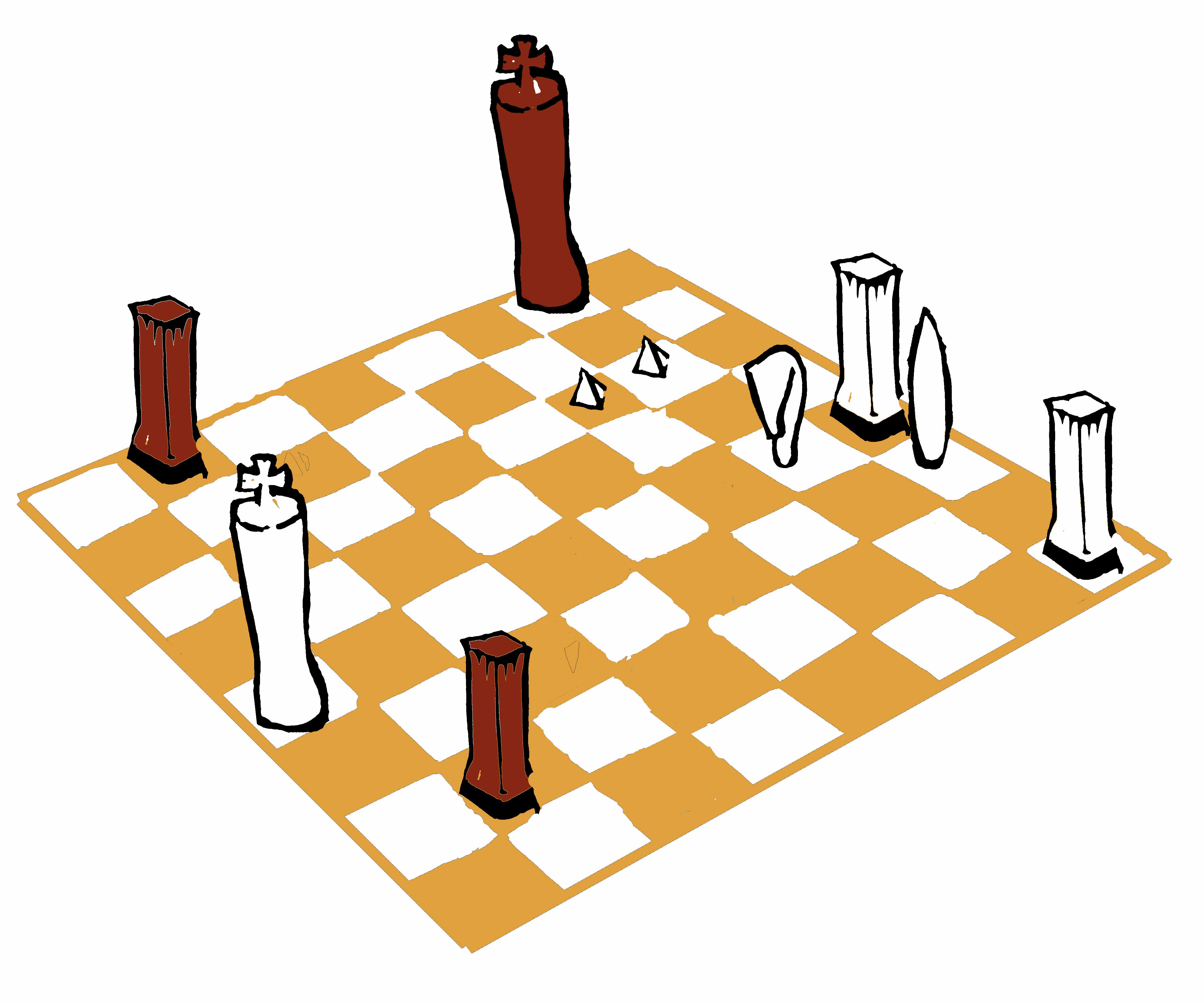
White’s king is trapped, as solidly as behind a wall, by those two castles. Anyone can see that black needs only one move, by either of them, to win checkmate.
At this dreadful moment, Lev had a heart attack. Or appeared to: he clutched his heart and head. Spectators started forward to help him.
He raised a calm arm to wave them off and to announce, with calm smile, a wild claim:
“Mate in five.”
The remembered and re-enacted story had come to its culmination. It was as if Fairose, watching and intuiting, again called out:
“Ey khân, do rokh bedéh, va Feyrûz-râ mádeh!
Pîl va peyâdeh pîsh kun, va ze-asp Shâh-Mât!”
“Oh prince, two castles give away, and give not your Fairose away!
Push pawn and bishop to the fray, then with the knight you’ll win the day!”
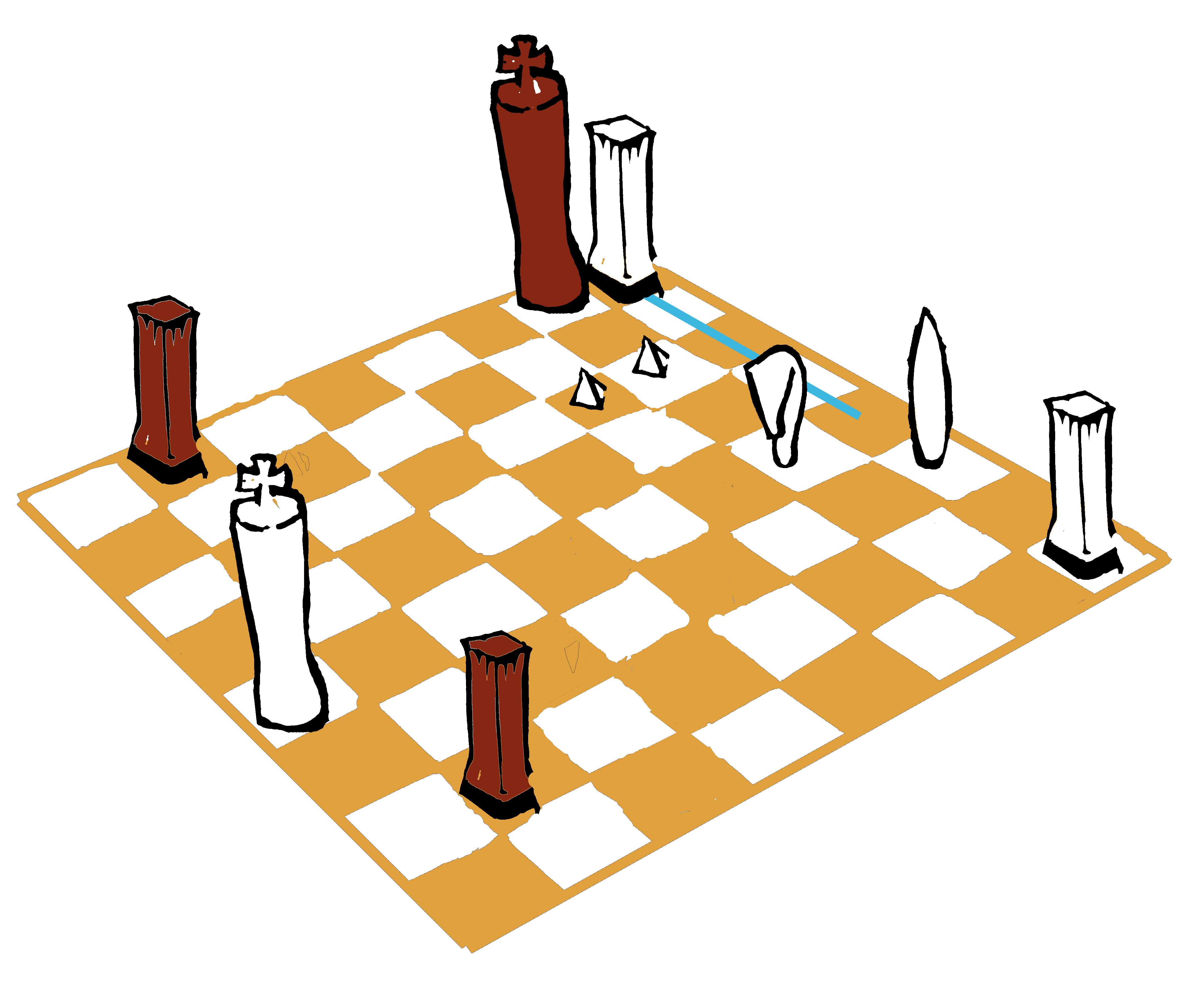
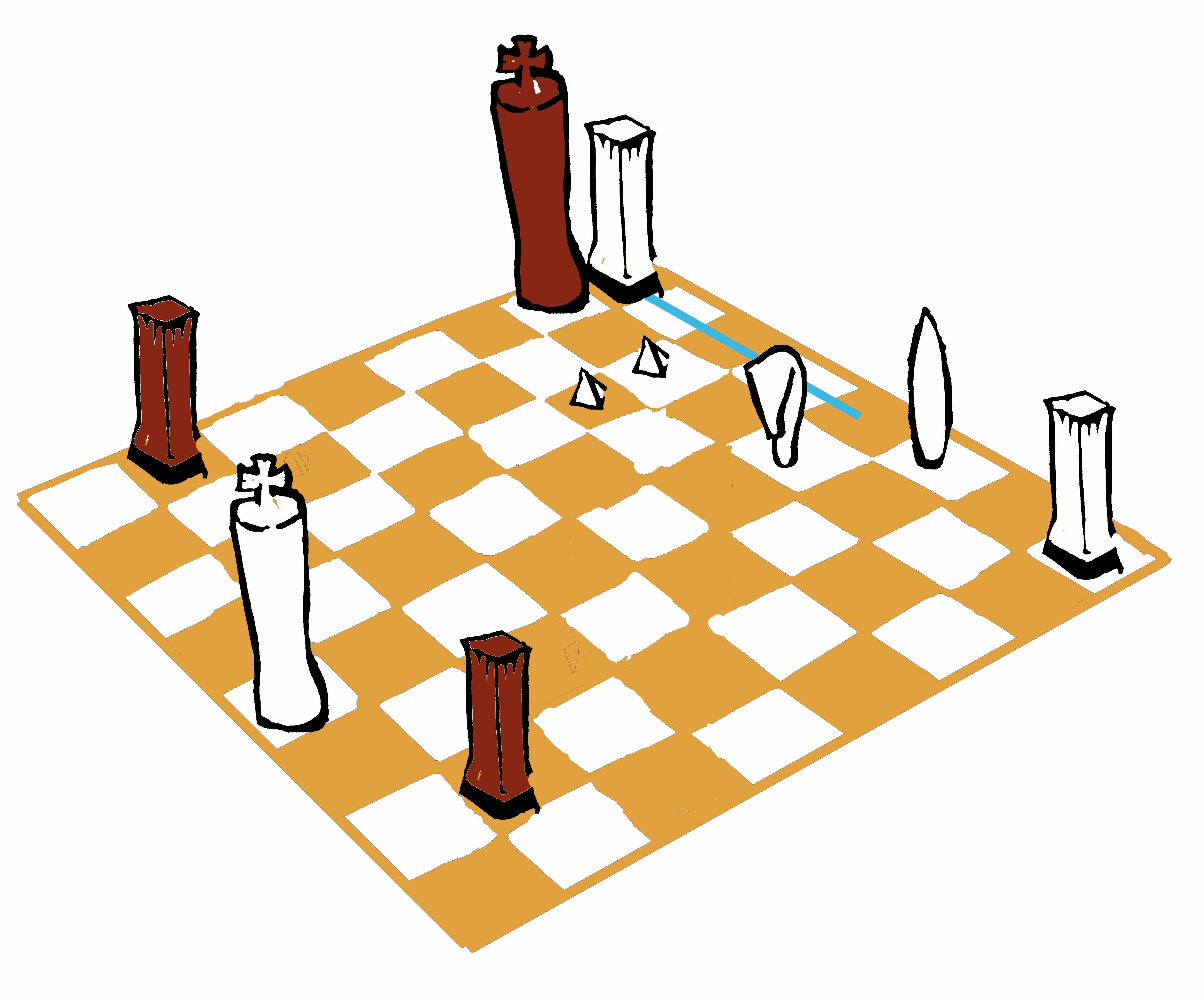
White rook to rook’s 8. Check.
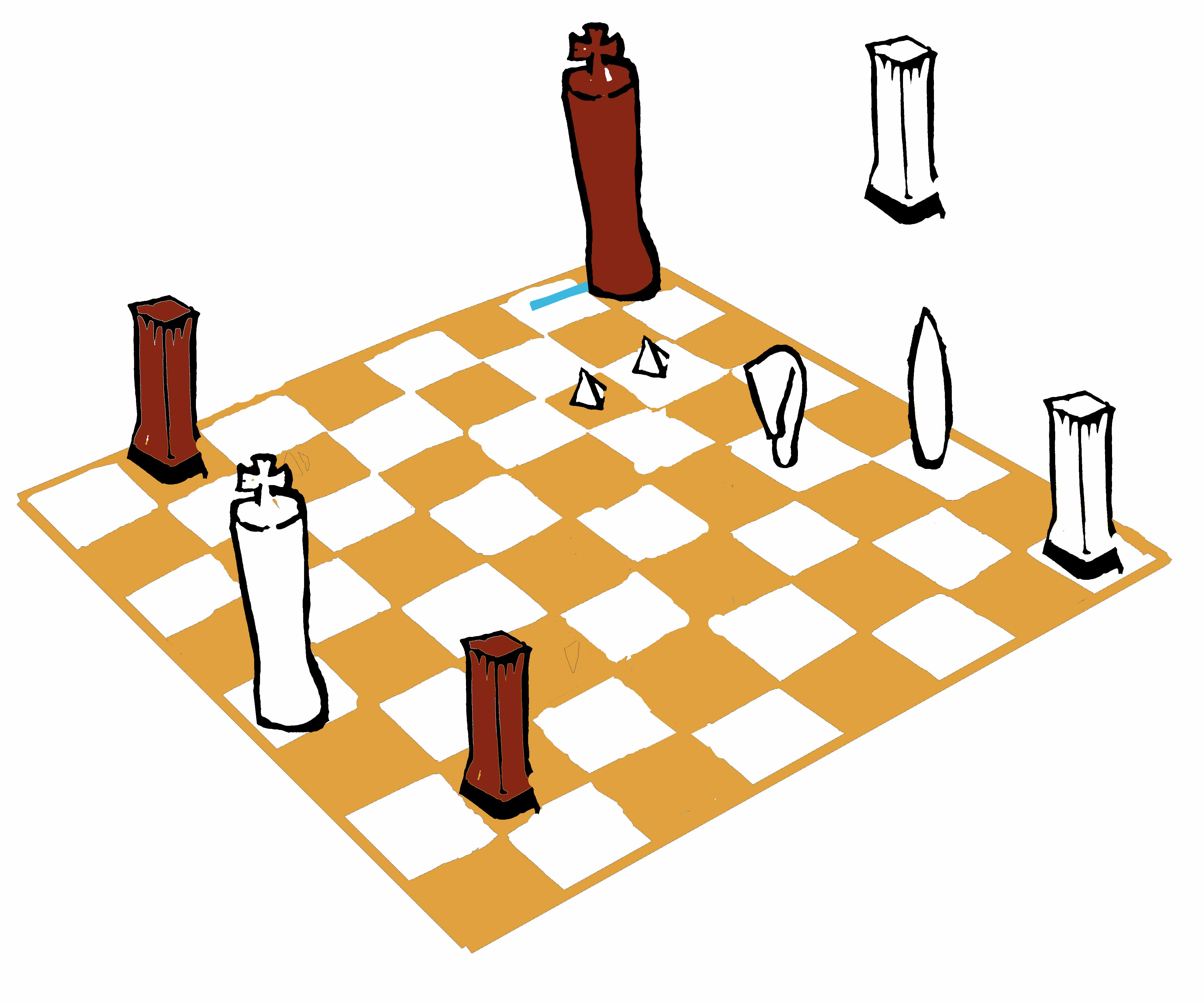
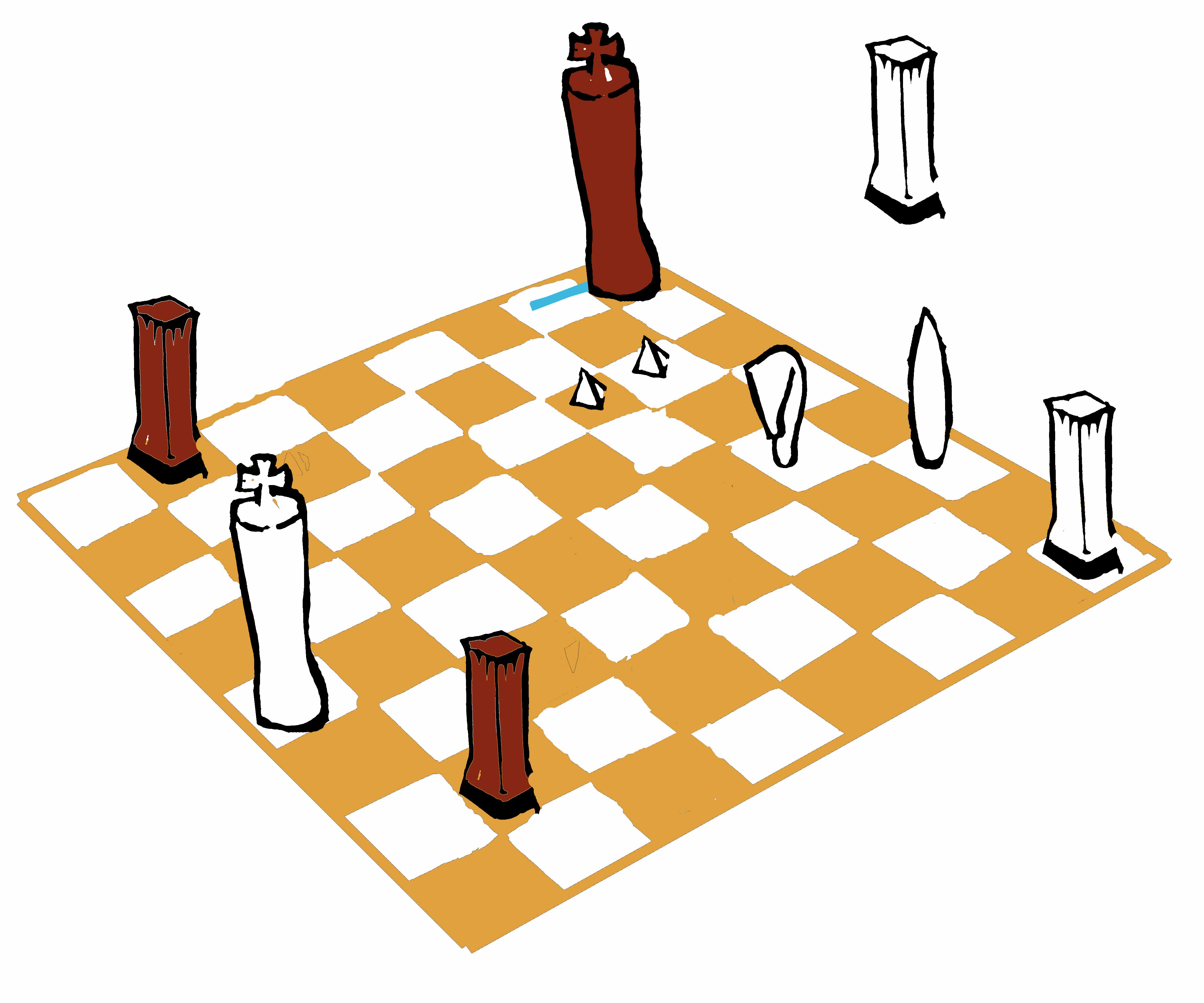
Black does not get to make that coup de grace. The sacrifice of one of white’s two castle prevents it. Black has no choice but to save his own kind from the suicidal attacker.
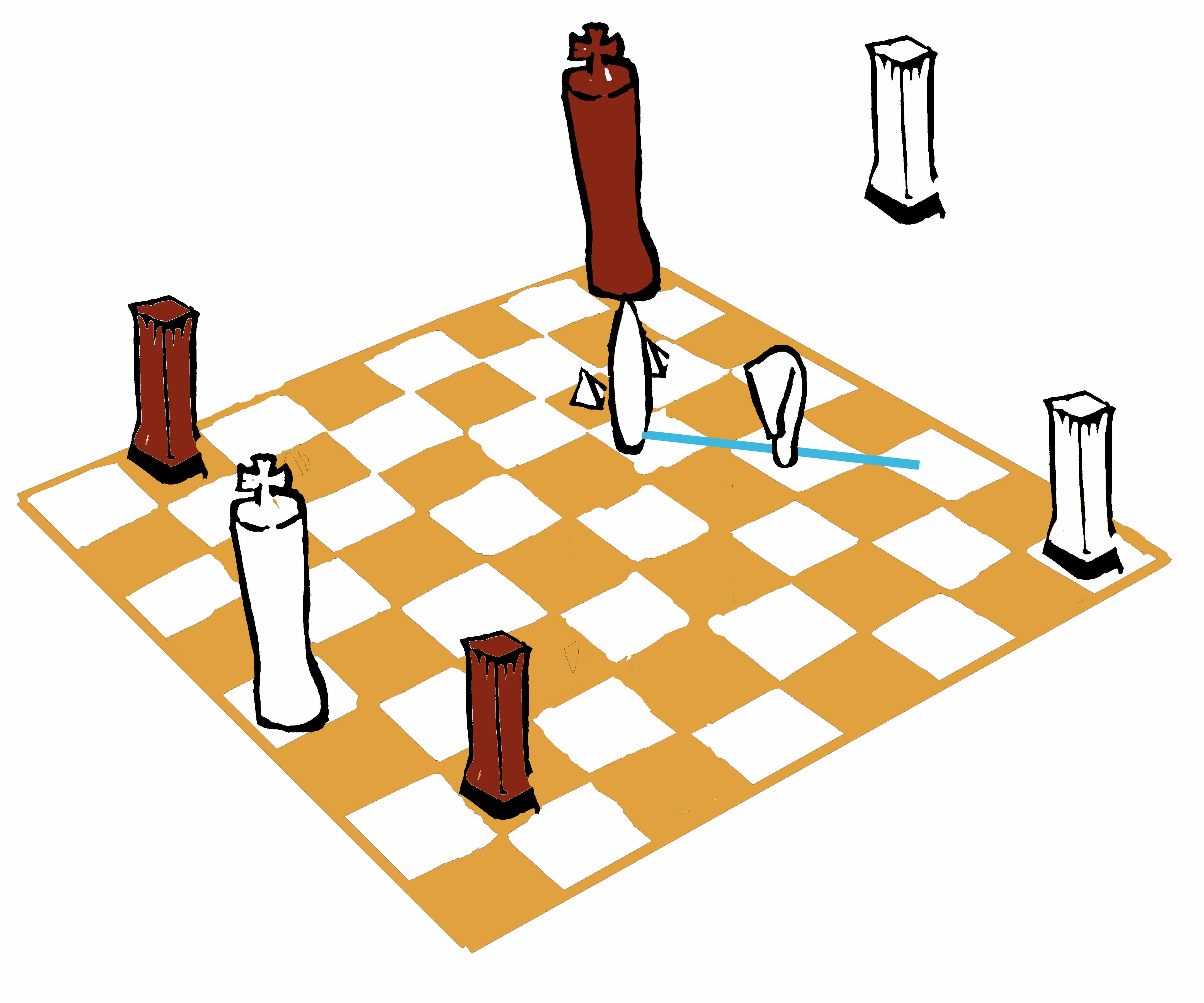
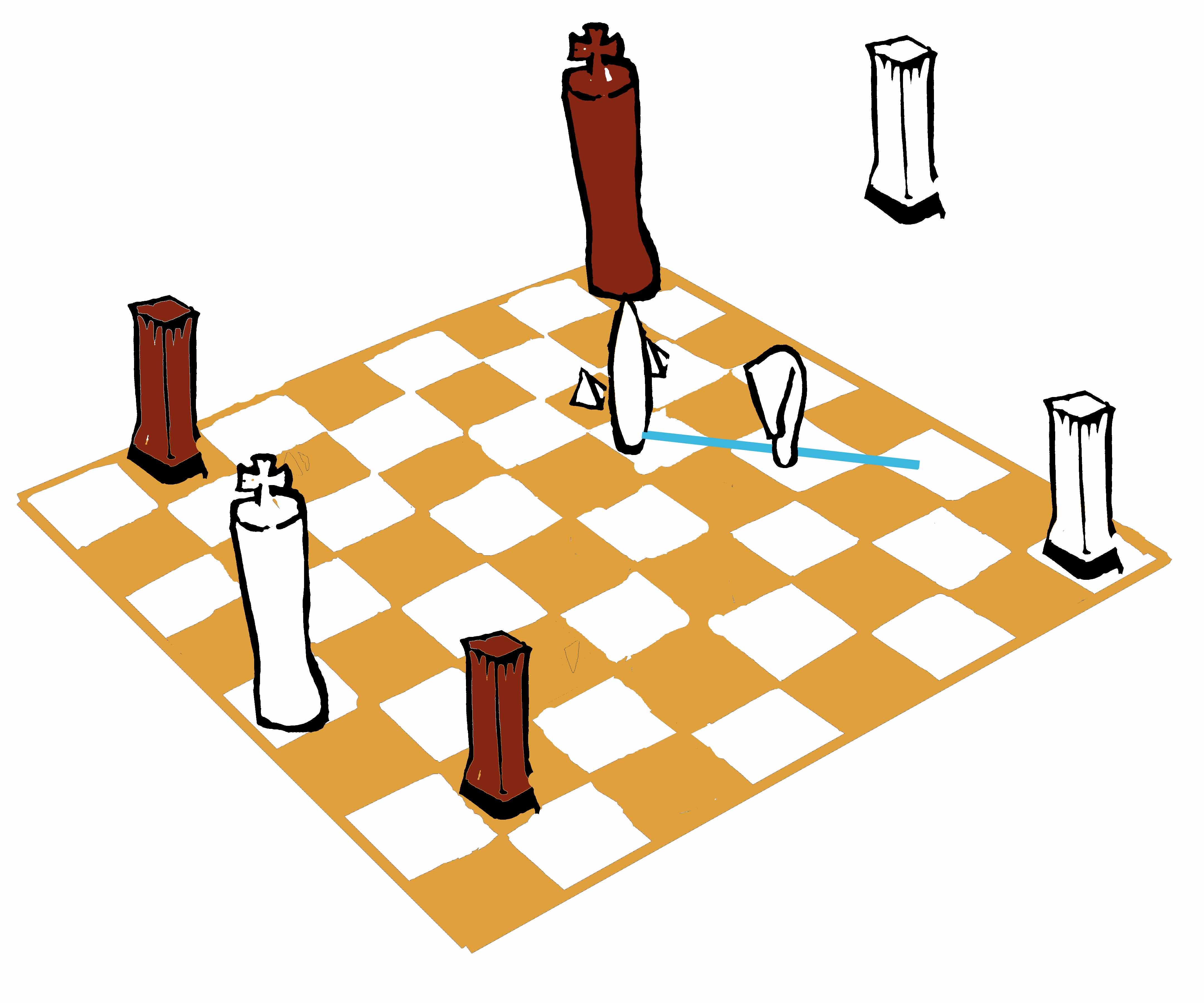
White’s bishop (elephant) hops over his own knight. This is the move that could be made in Persian and not in our familiar chess. And what it achieves immediately is “discovered check”. The hopping “elephant” does not directly check the black king, but gets out of the line of fire for another piece. The move achieves more: it puts this piece where it needs to be three moves later. Fairose was perceiving a long way ahead if she divined that playing by the Persian rule could lead to this.
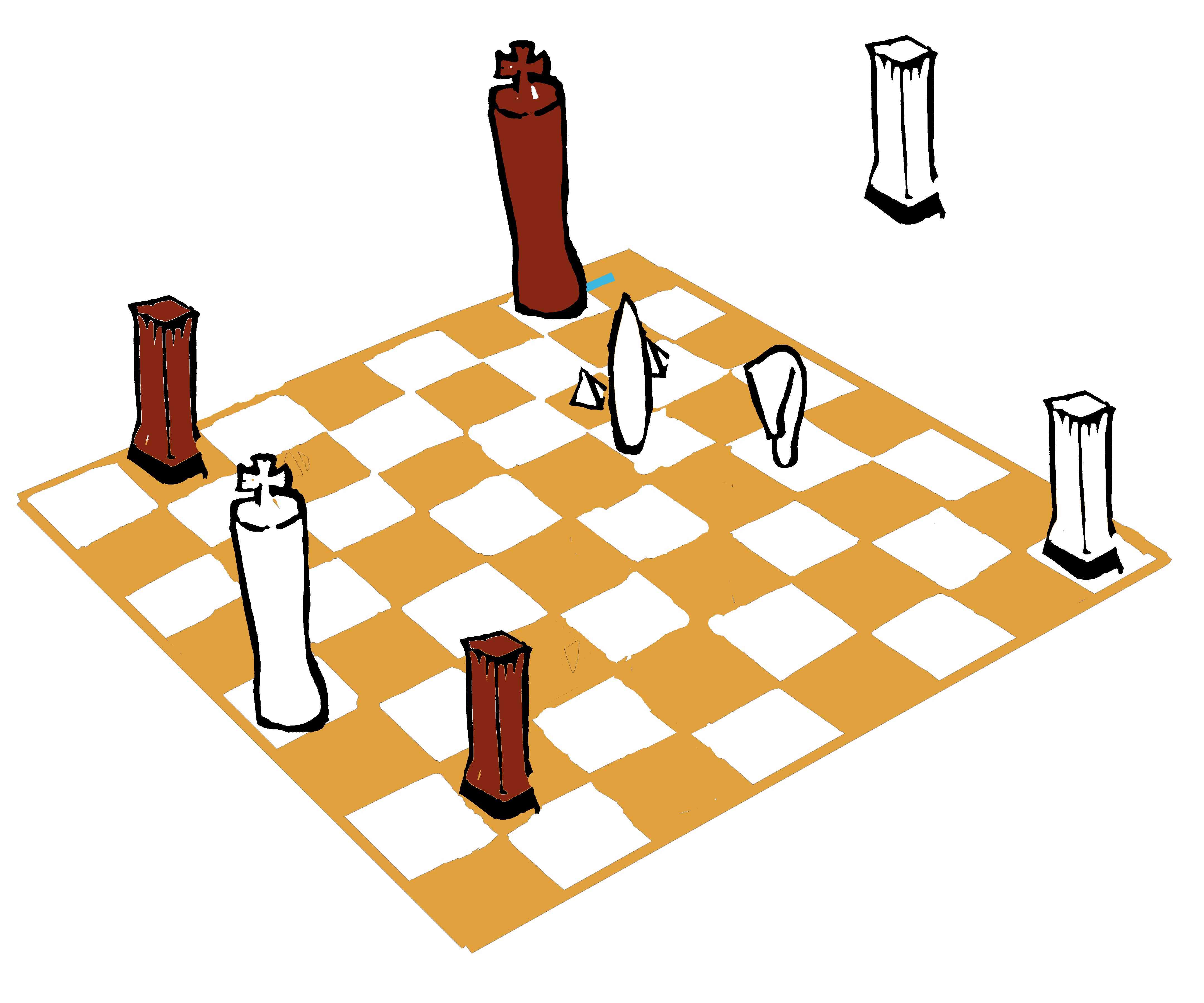
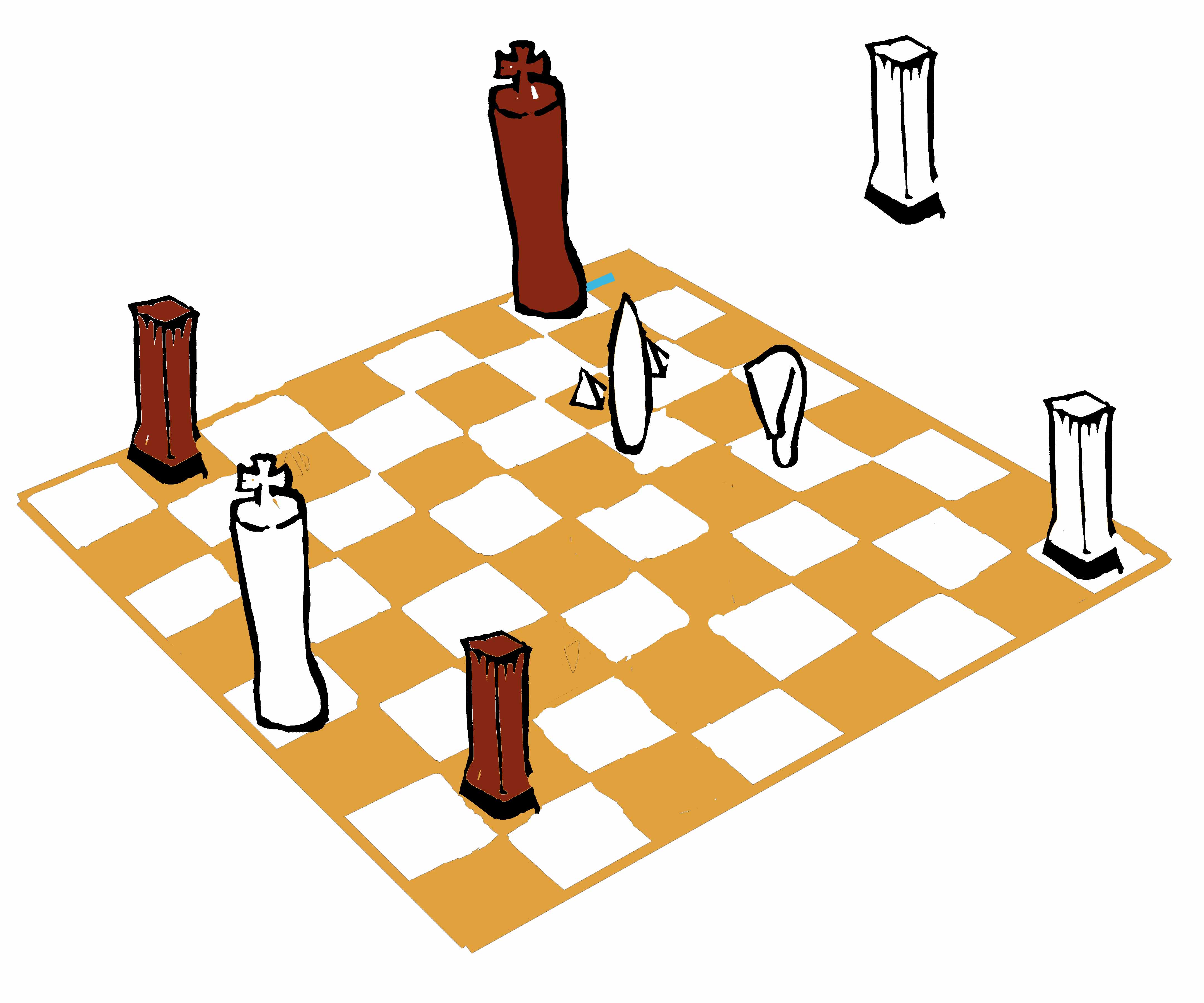
So the black king has to dodge back to where he was.
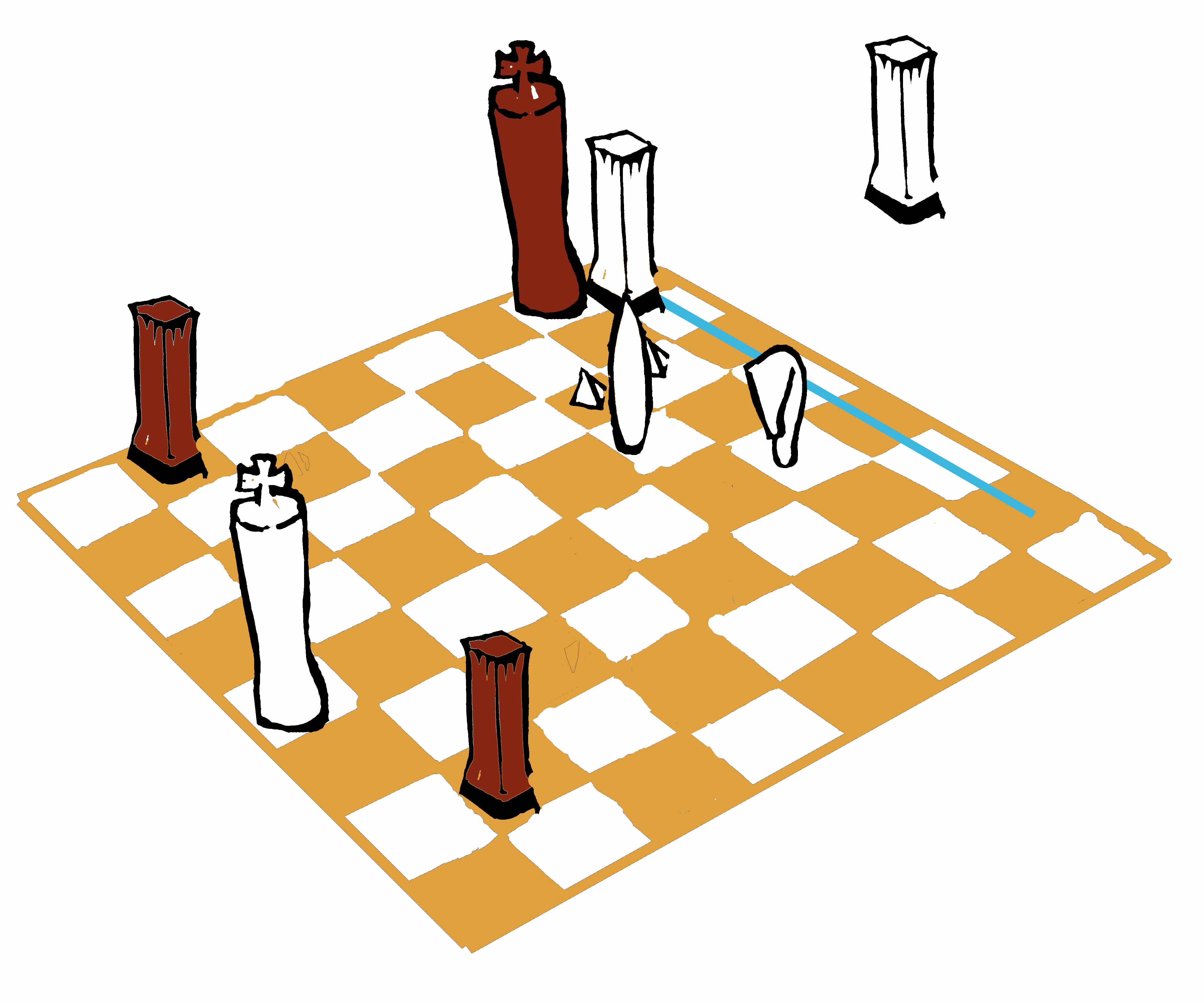
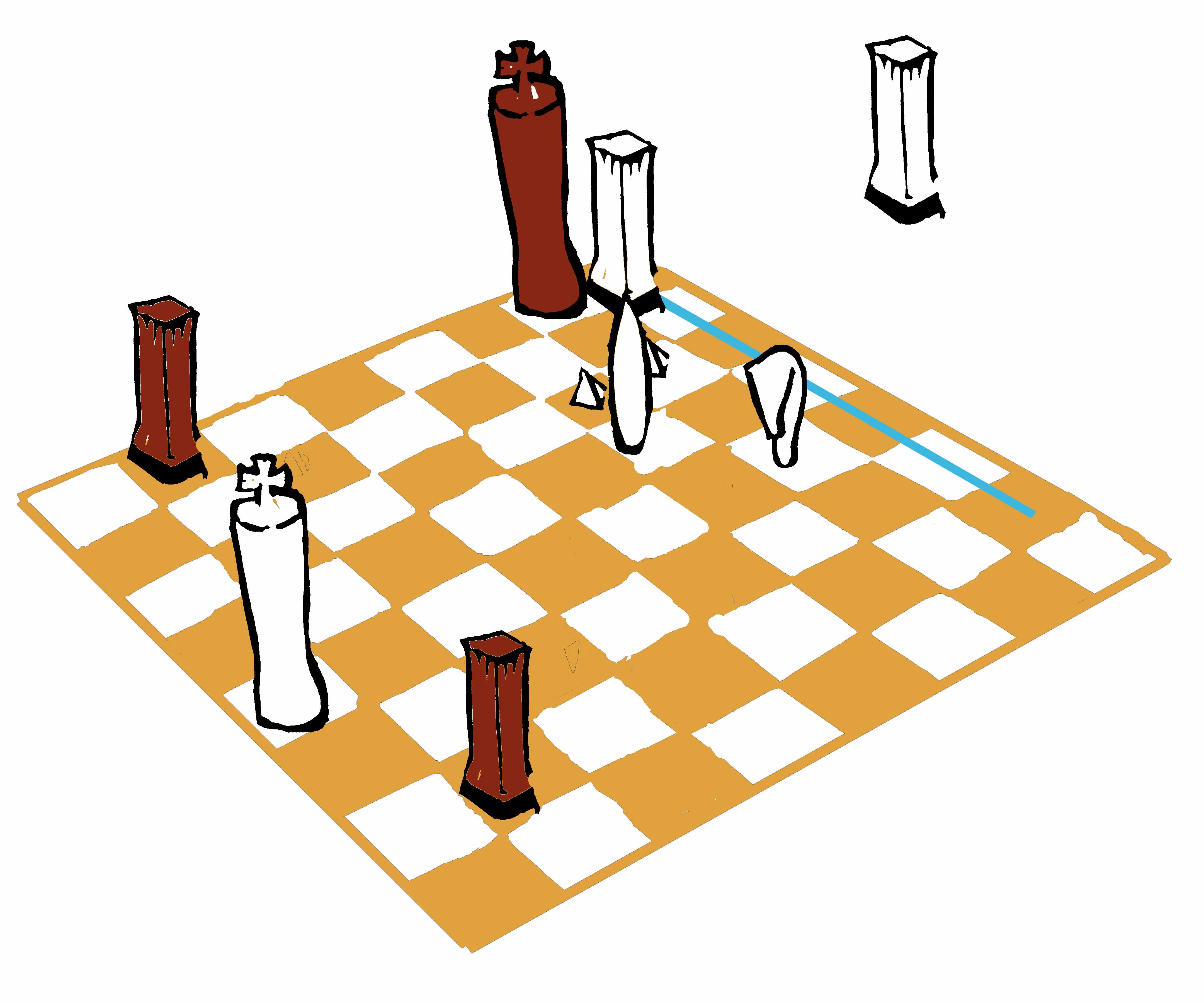
The other white rook dives to the same kamikaze check.
Sacrifice, the deliberate losing of a major piece, or several of them, in order to force a more important goal, is, with its sparkle of paradox and courage, the “brilliancy” in many of the famous games in chess history; such as the “Immortal Partie”, Andersen vs Kieseritzky, 1851, in which Andersen sacrificed not only both castles but a bishop and his queen.
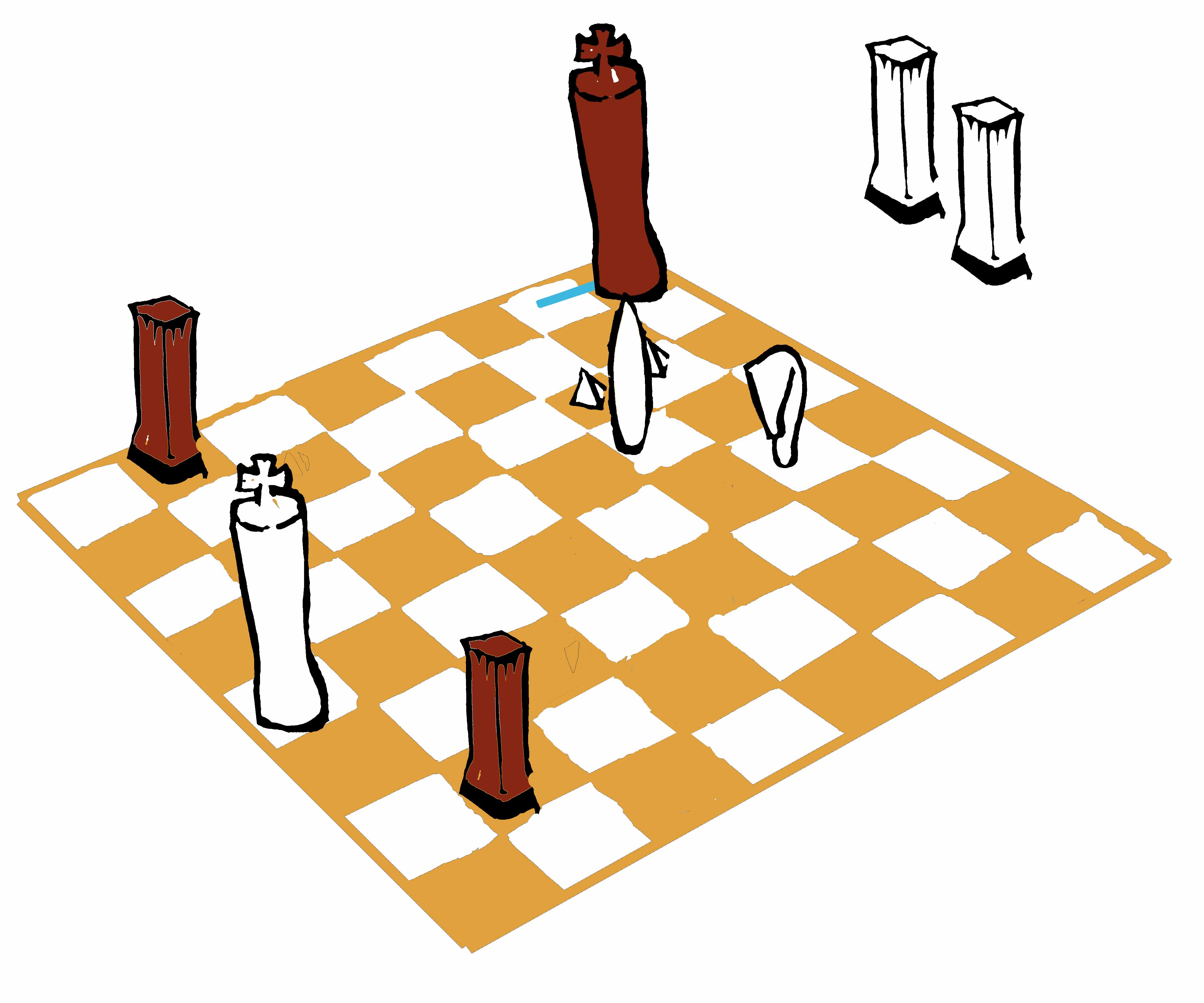
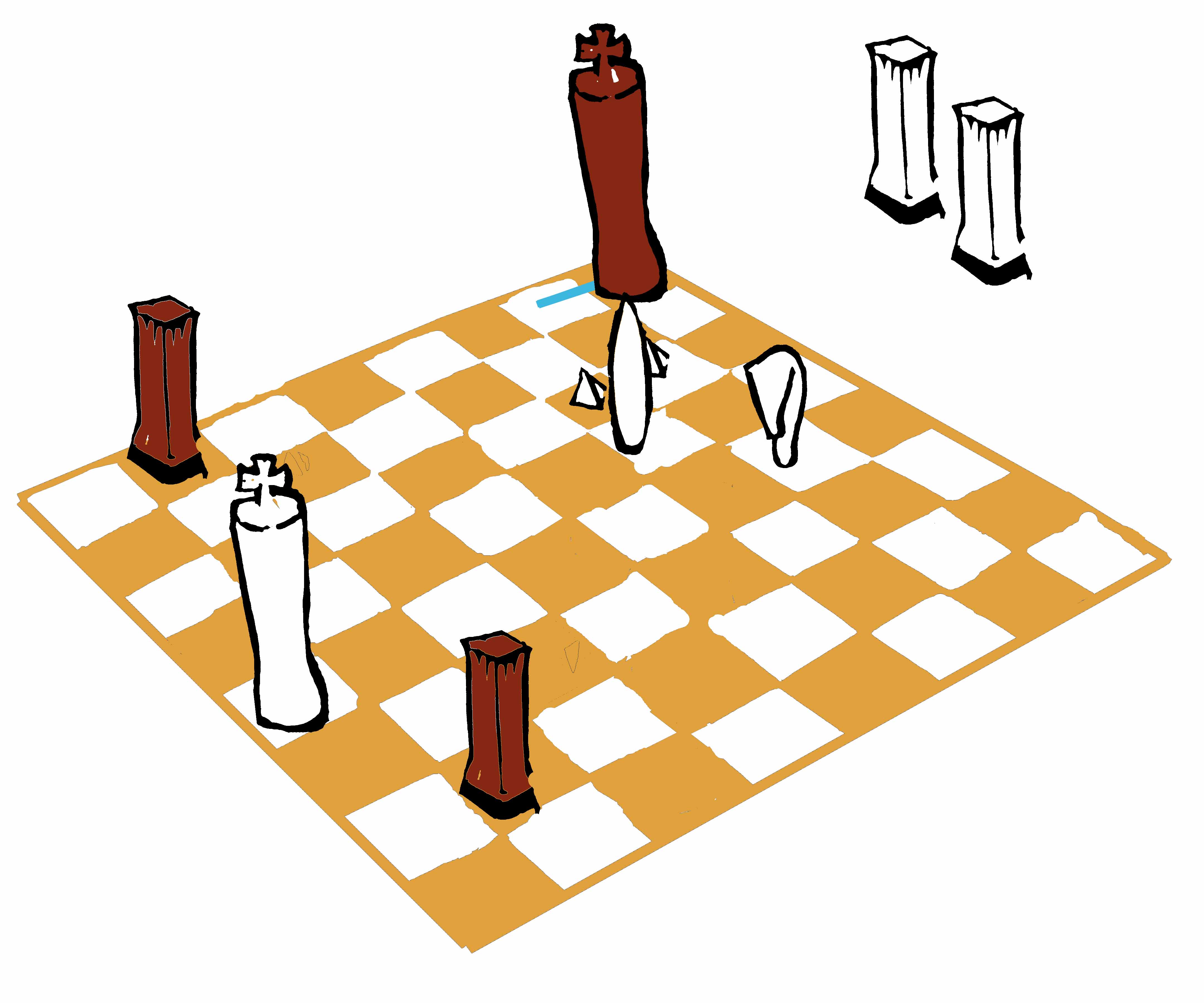 Black’s kin has to take that rook too.
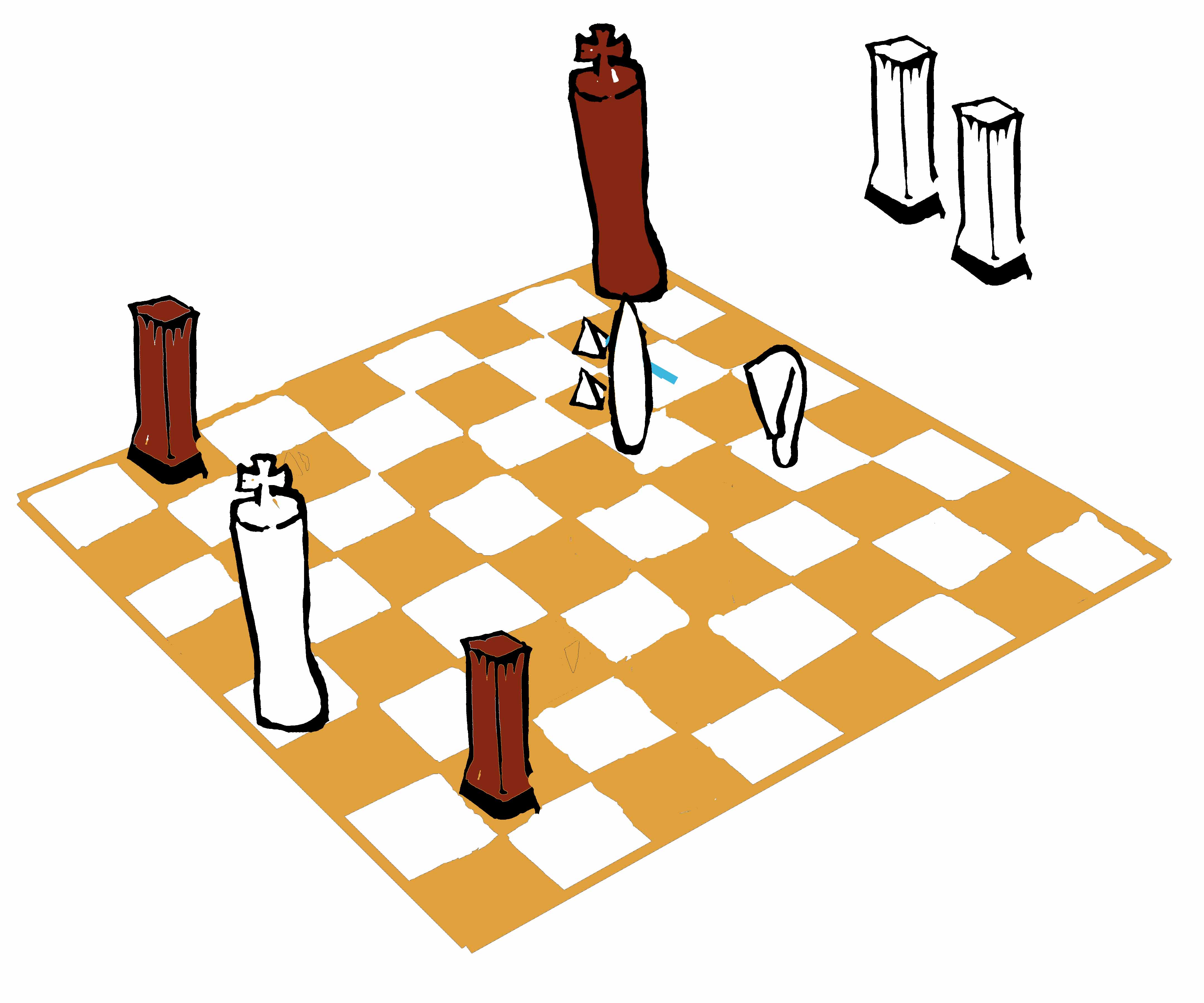
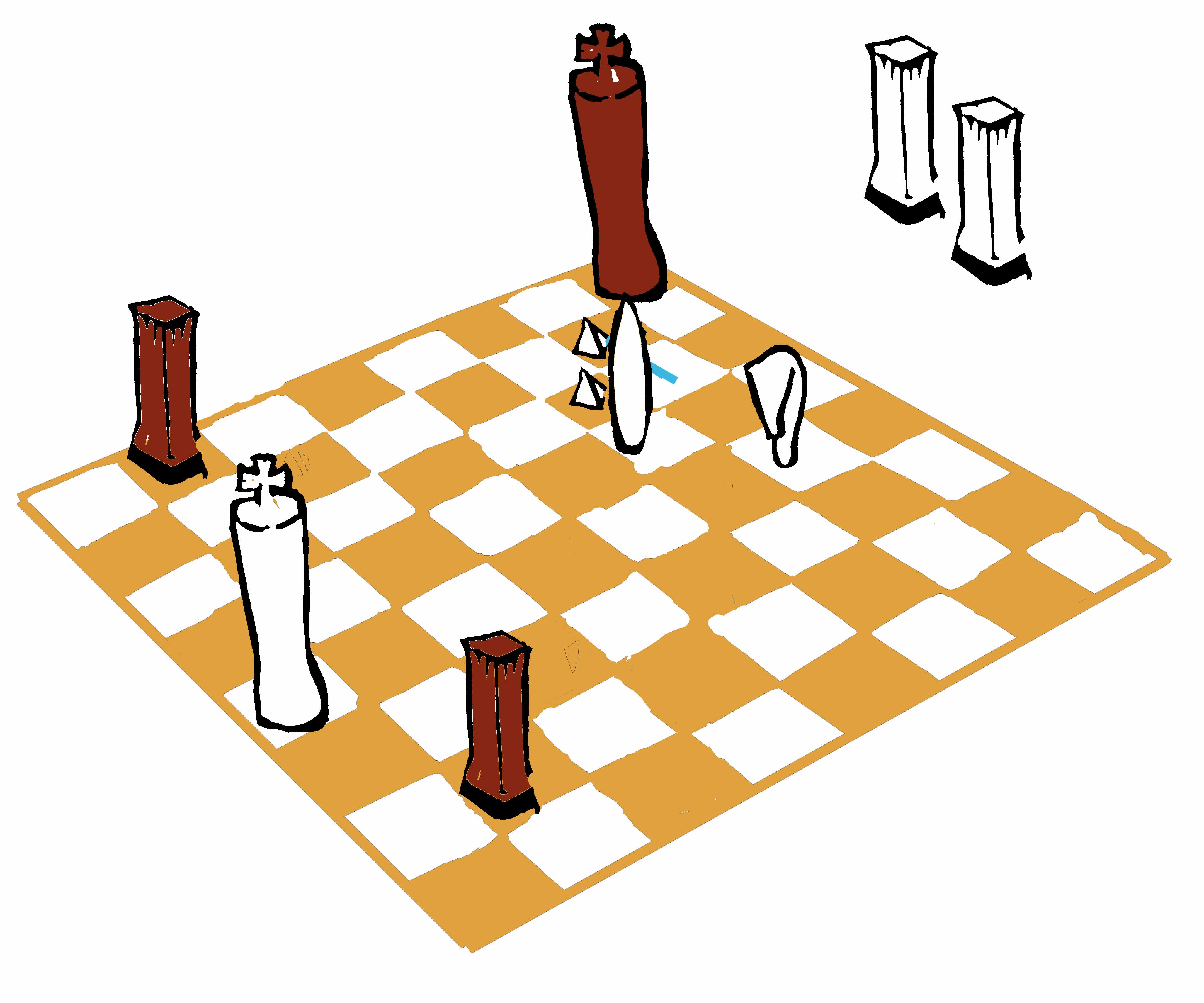
White’s knight’s pawn gives the penultimate check.
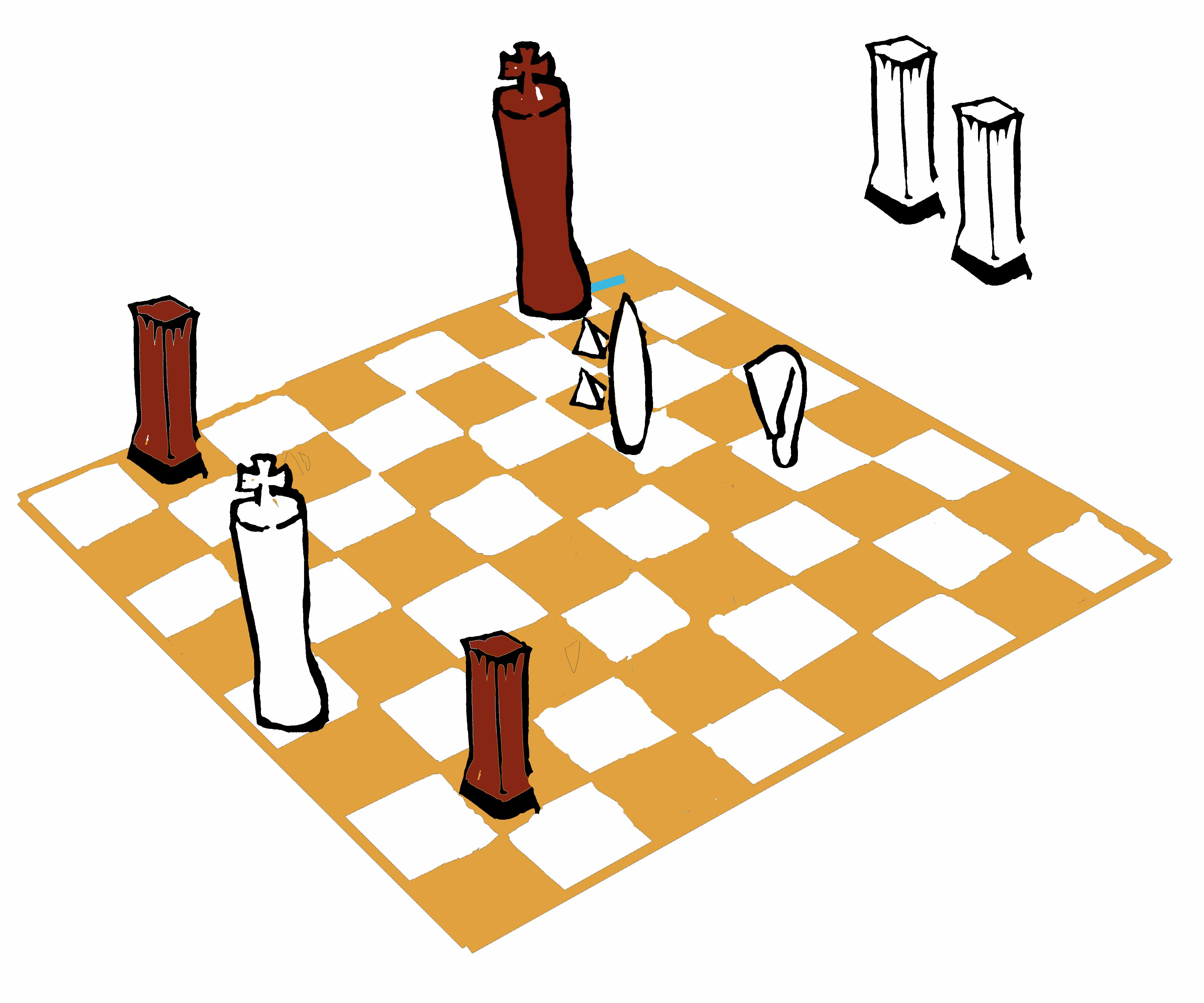
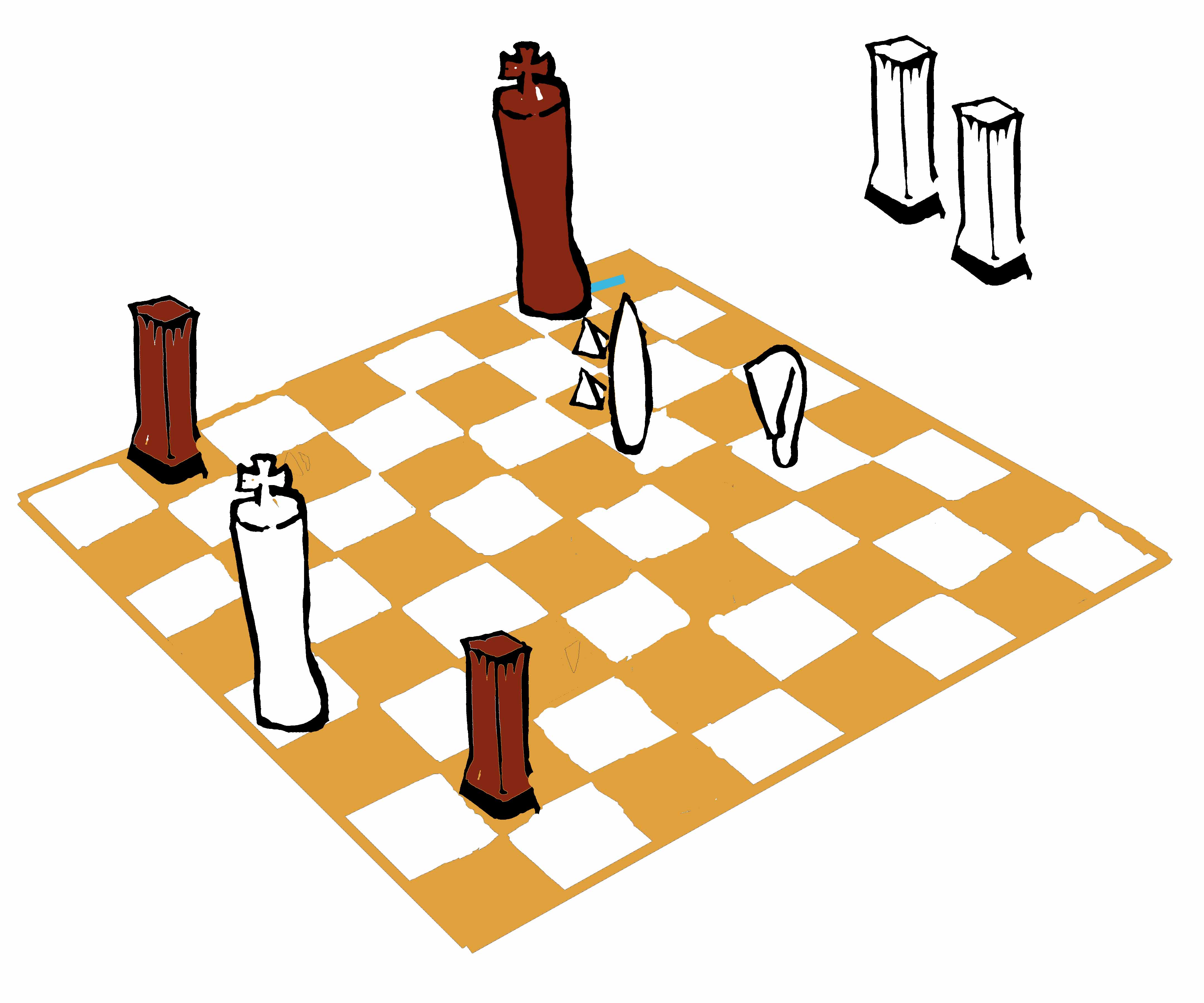
Black’s king has to dodge back again. Pawns, footsoldiers, can’t take straight-on.
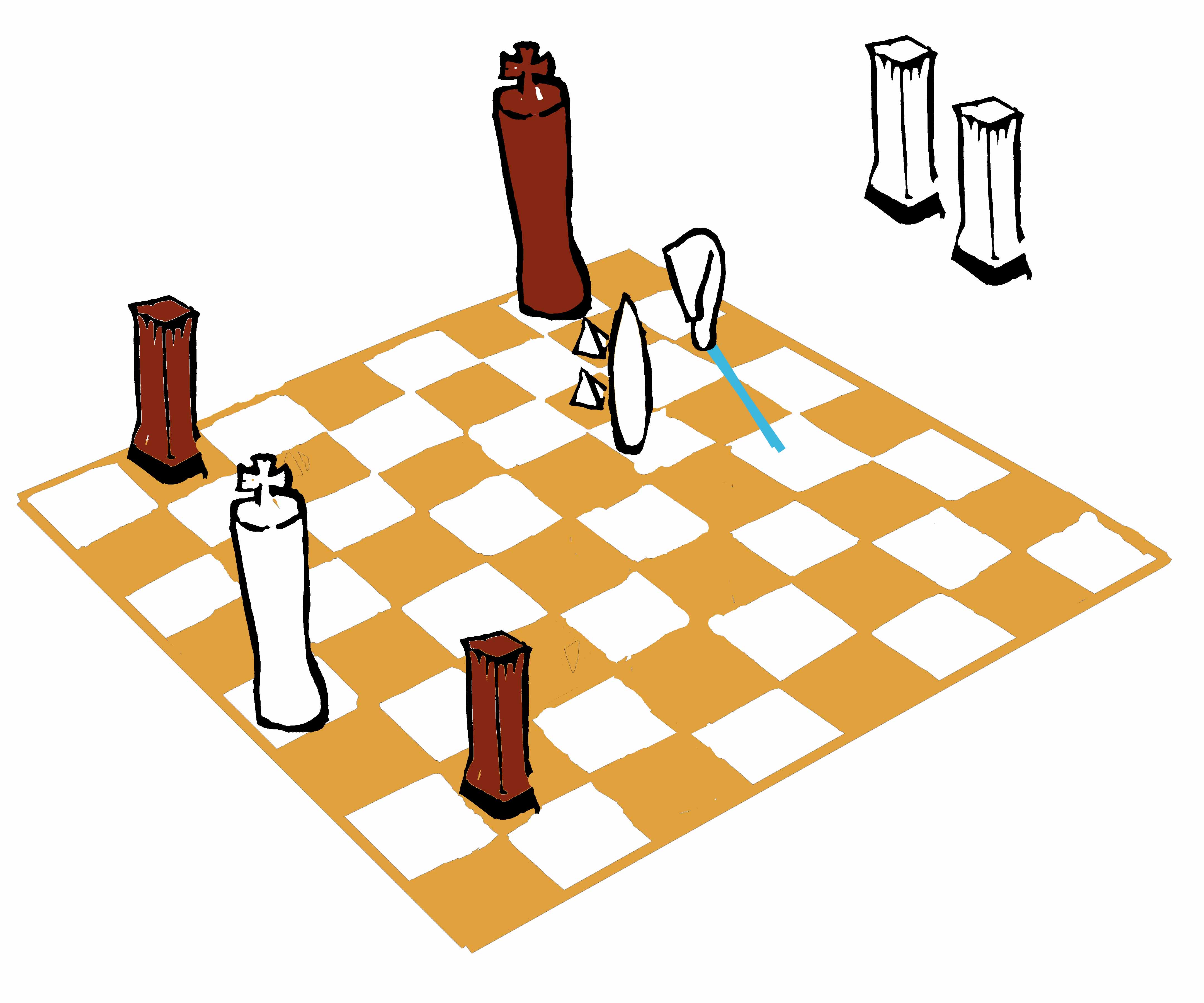
The squares a pawn can attack are the two diagonally ahead, as if using left or right fist. So when White’s knight leaps to give check, all five squares around Black’s king are forbidden to him because under threat. By (clockwise) the advanced pawn; the knight; the other pawn (covering his buddy); the bishop-elephant; and again the knight.
Shâh-mât. Fairose has won the day.
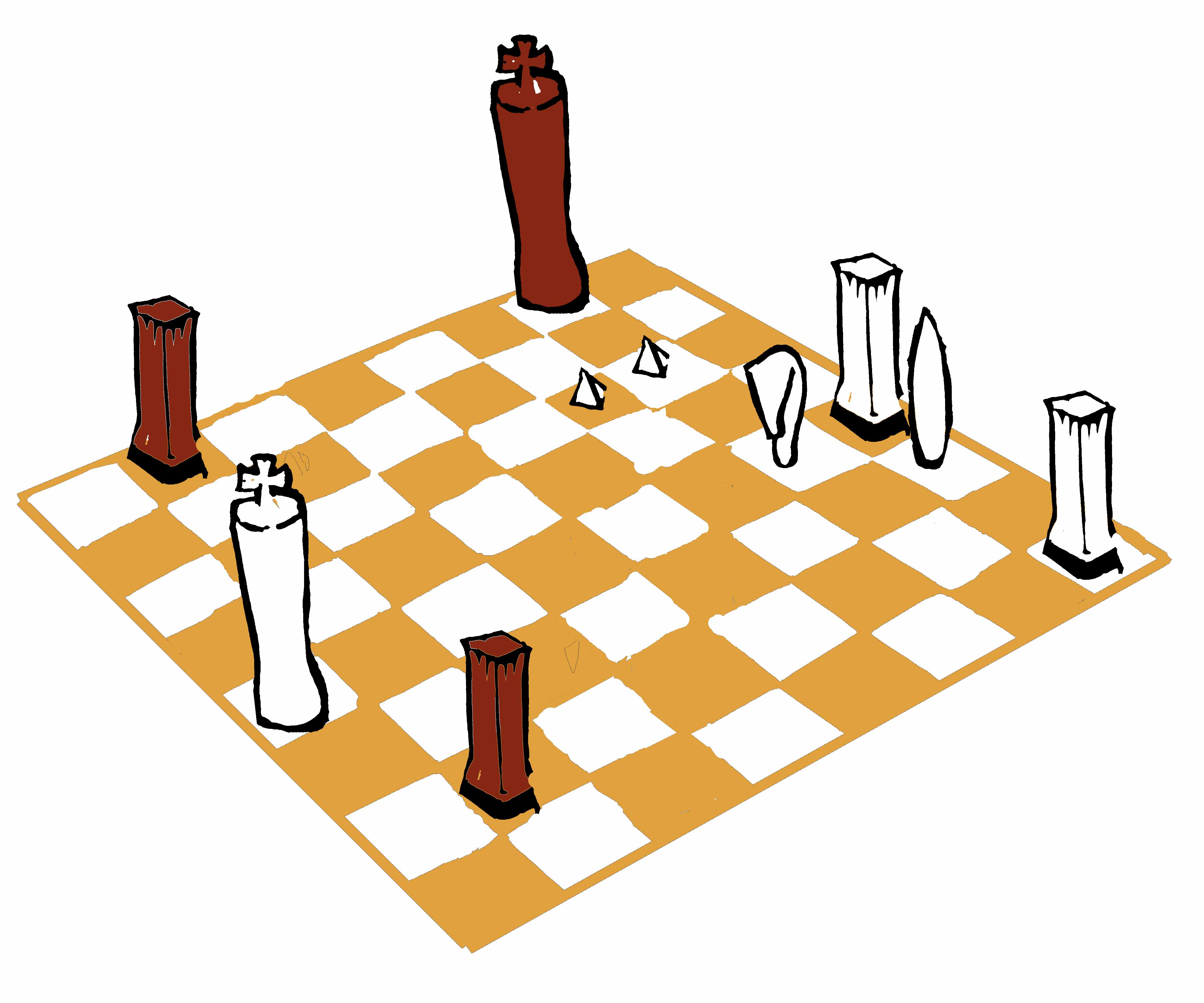
A step-through of the chess moves
Here is a gallery of the 10 situations we have already shown. Click on any one of them, and you will be able to use arrow keys or on-screen arrows to step through the game, forward and backward, taking your own time.
It’s fun to keep fingers on the two arrow keys and keep jumping on and back to relish the move and its effect!
0
1a
1b
2a
2b
3a
3b
4a
4b
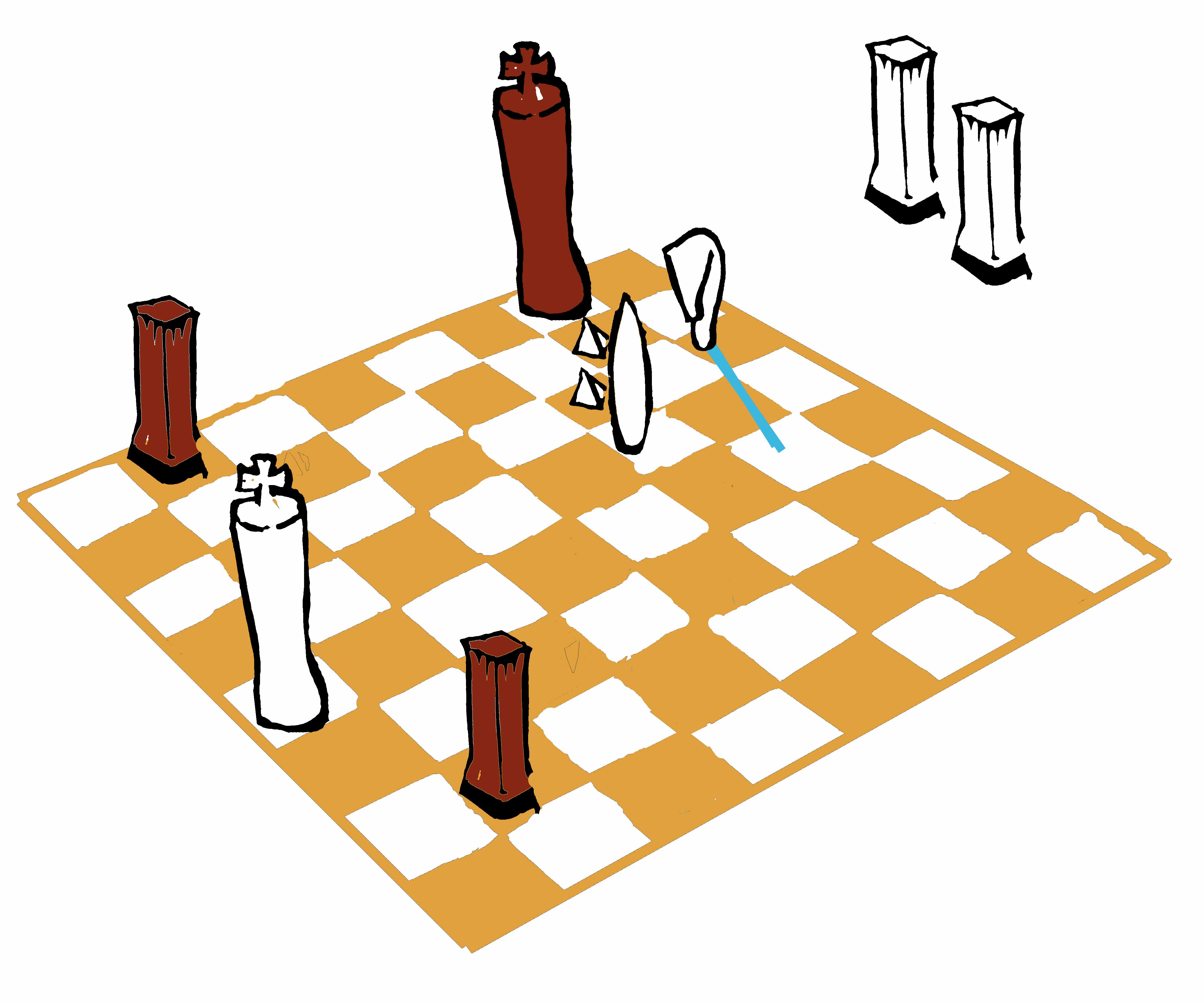
5a
-
0
White king is trapped by those two black rooks (castles). -
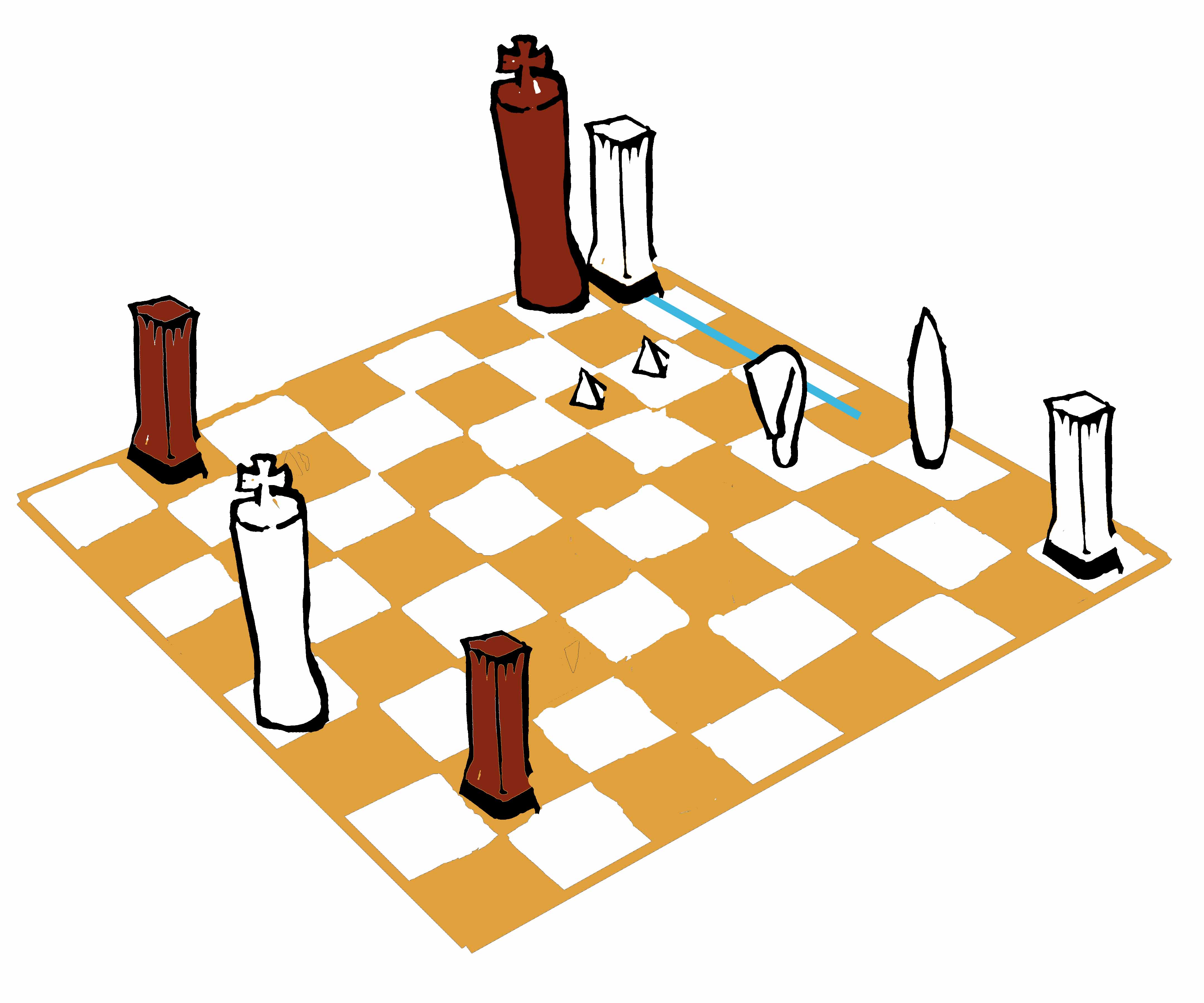
1a
White rook gives check, by sacrifice. -
1b
Black king has to take the first whhite rook. -
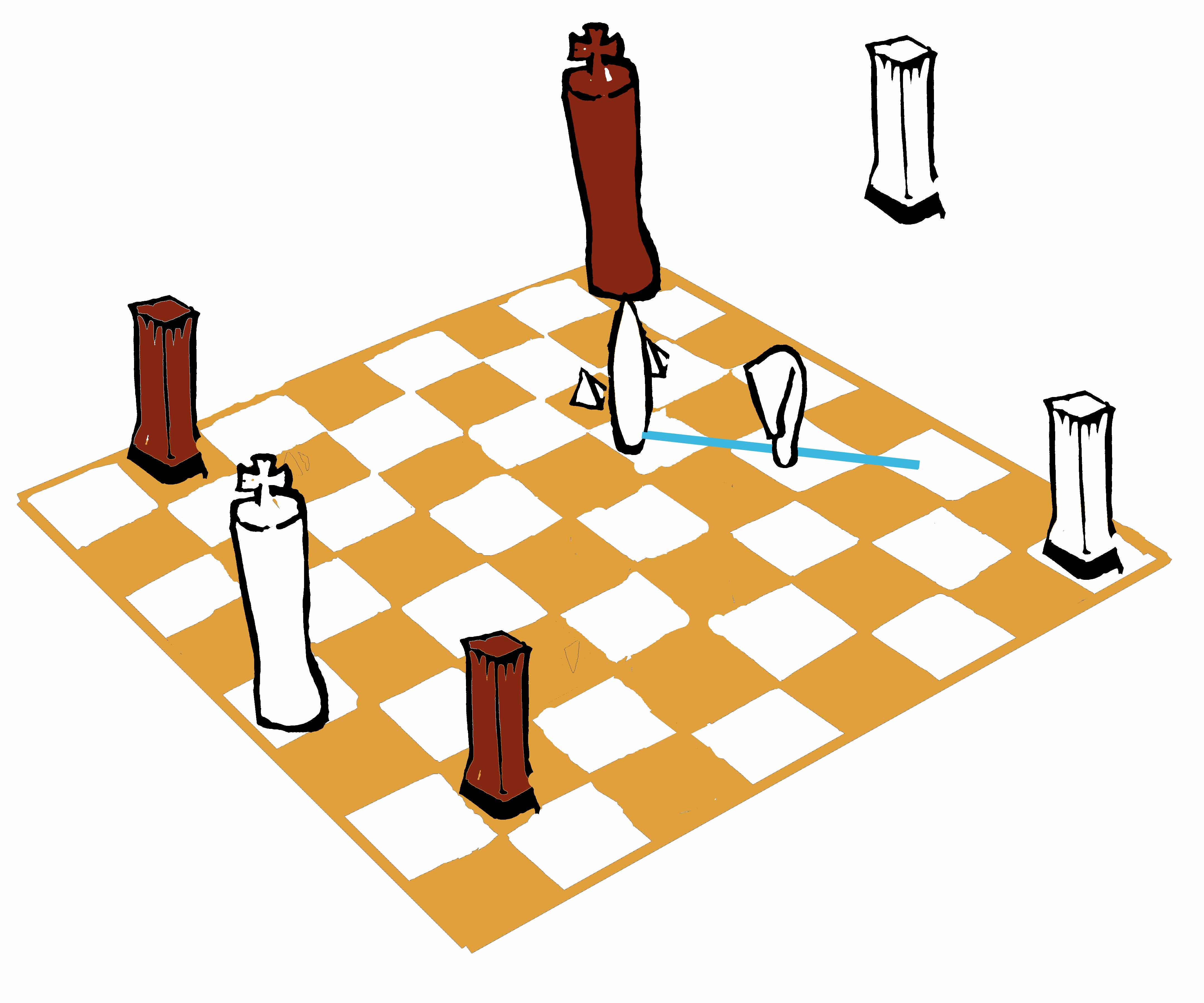
2a
White bishop (elephant) hops over white knight. This is the move that is possible in Persian chess. It gives discovered check. by white's other rook. -
2b
Black king has to dodge back to where he wass, -
3a
White's other rook gives check by sacrifice. -
3b
Black king has to take the second white rook. -
4a
One of white pawns gives the penultimate check. -
4b
Black king has to dodge back yet again. -
5a
White knight gives checkmate. The square the black king is on, and all five adjacent to it, are under attack.